


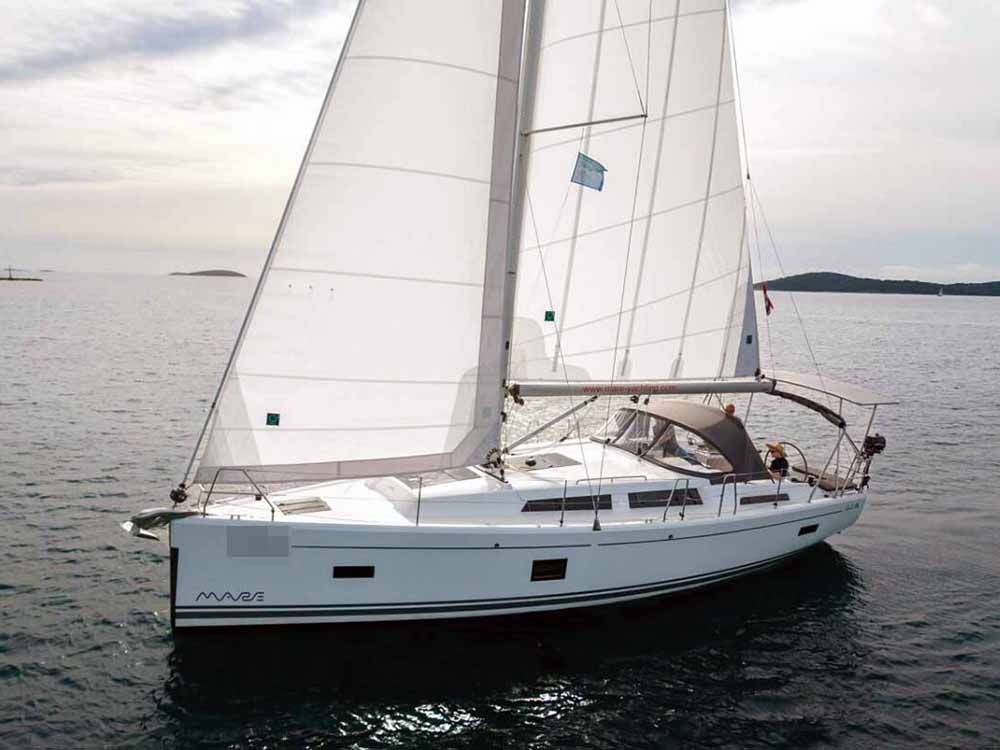
The Hanse 388 is a modern performance-cruiser from Hanse Yachts that was launched in the late 2010s as a compact, fast and user-friendly 38-foot cruising platform. Designed by judel/vrolijk & co and introduced into the Hanse lineup around 2017, the 388 was conceived for owners who want spirited passage-making and easy short-handed sailing without sacrificing interior comfort. Its market niche is clear: couples and small families who cruise coastal waters and want above-average sailing performance for the size, plus owner-operators and broker inventories that favor models with sensible option packages (self-tacking jibs, performance or shoal keels). The model’s long dealer presence and steady listings on brokerage sites means it is well represented on the used market and regularly traded in U.S. brokerage hubs.
Design and Construction
The 388 follows a contemporary but conservative Hanse approach to hull and deck form: a relatively plumb bow, moderate beam carried aft and a single, deep fin keel with a bulb (with shoal options) plus a single spade rudder. Judel/Vrolijk’s lines give the boat a hull that balances form stability and a clean underwater profile rather than the extreme chines or twin-rudder arrangements some rivals use; that choice favors directional tracking, simpler steering hardware and an easier structural layup. Construction is conventional modern production: solid laminate hulls with cored decks and factory fit-out, a Selden deck-stepped rig and standard saildrive or saildrive-style propulsion packages. Those decisions produce a boat that is relatively straightforward to repair (GRP laminates, standardized hardware) and that typically shows well at survey if the usual production-boat trouble spots (deck penetrations, chainplate beds, saildrive seals) have been correctly attended to. From an asset-value perspective the combination of a respected designer, a recognizable builder and an uncluttered specification tends to preserve resale appeal among buyers looking for an easy-to-own 38-foot cruiser.
Performance
On the water the Hanse 388 is widely described as a lively but secure coastal cruiser: the hull and rig are tuned to accelerate quickly off the wind, maintain strong cruising speeds on a reach and to hold reasonable VMG to windward for a production cruising yacht. Test reports and owner experience show the boat can cruise in the mid-6 to low-7 knot range in typical coastal conditions and to press into the upper-6s on good days upwind; a taller or performance rig and a well-trimmed sail plan reward owners with noticeably quicker passages than older, heavier 38-foot cruisers. Handling is tidy — the single rudder and moderate keel give predictable helm feedback and the self-tacking jib options make short-handed tacks simple — so the 388 sits in the sweet spot between “fast cruiser” and practical family boat rather than in the dedicated club-racer category.
Comfort and Accommodations
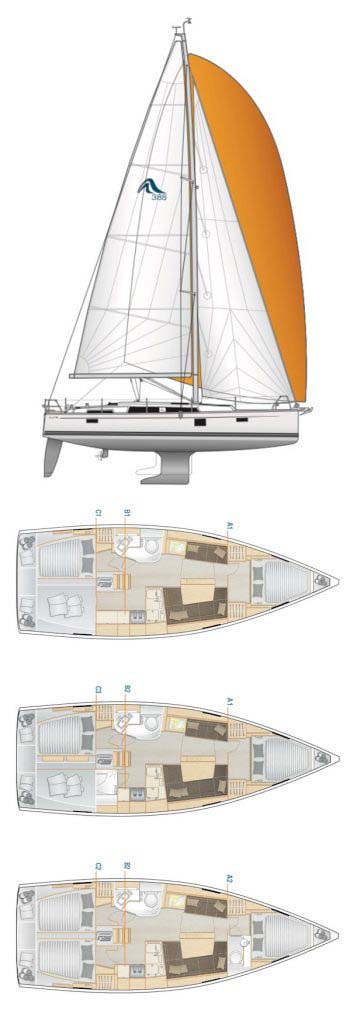
Belowdecks the Hanse 388 uses beam-carrying aft sections and smart interior packaging to deliver more usable volume than older 38-foot designs. Typical layouts include two- or three-cabin plans with a bright saloon, reasonably sized galley and practical lockers; Hanse’s factory fit-out emphasizes light, uncluttered joinery and large portlights that improve ventilation and natural illumination. For weekend and seasonal family cruising the 388 is very competent — bunks are comfortable, galley ergonomics are sensible for underway cooking and storage is adequate for typical coastal provisioning. Full-time liveaboard use is feasible for many couples but, as with any modern 38-footer, long-term comfort depends on thoughtful systems upgrades (battery capacity, refrigeration and ventilation) and careful stowage planning rather than on raw space alone.
Safety and Practicality
Deck layout is arranged to favor safe movement and short-handed sailing: clear coachroof walkways, organised sheeting to the cockpit and options such as self-tacking jibs reduce the need for crew on the foredeck. The single rudder and deeper keel promote positive tracking and predictable behavior in confused seas, while the conventional engineering (Yanmar engines / saildrive options) keeps spare-parts and servicing widely available in U.S. yards. For true offshore passagemaking owners usually add redundancy — stronger seacocks, dedicated storm sails, liferaft and additional nav redundancy — but for coastal cruising and occasional overnight offshore legs the 388’s standard package is fundamentally practical. The boat’s systems and access panels are generally laid out with dealer servicing in mind, so owners with routine maintenance skills can keep recurring costs reasonable.
Known Issues with the Hanse 388
Most of the documented issues with the 388 are typical of modern production yachts and fall into two categories: (1) installation/maintenance-dependent troubles and (2) isolated hardware or production-run defects. Owner forums and reports point to a few recurring themes: saildrive seals and lower-unit service frequency require attention (saildrives need regular service and seal replacement intervals), and a handful of owners have reported rudder-bearing or rudder-attachment anomalies that deserved early rectification on the yard’s warranty tab. Deck-core penetrations (anchor locker drains, chainplates and forward hatches) are the usual places to inspect for soft spots or past repairs on any cored-deck boat; buyers should verify the chainplate beds and inspect any evidence of water ingress carefully. Practical, commonly recommended upgrades from the used-boat market include swapping in a three-blade or folding prop for better motoring efficiency, refreshing standing and running rigging per survey timelines, and modernizing electronics — improvements that increase reliability and resale appeal.
Market Availability and Pricing in the U.S.
The 388 appeared in Hanse’s stable beginning in the 2017 era and has continued to appear in dealer stocks and brokerage listings through the early 2020s; you will find both recent new/in-stock boats offered by U.S. dealers and a fair number of pre-owned examples offered coast-to-coast. U.S. listings in dealer inventories and brokerages show asking prices that reflect year, option pack and location — examples in North American inventories over the last few seasons have ranged from roughly the low-$180k area for older/bare-bones craft up to the mid-$300k range for well-equipped, near-new dealer boats. A practical price band for U.S. buyers looking at active listings is $180,000–$345,000 depending on age, gear and location; well-specified boats in Florida, California and the Pacific Northwest are frequently the higher-priced examples, while stock boats and European imports sometimes appear at the lower end. Availability is best in major brokerage centers (Florida, mid-Atlantic, New England and West Coast ports) where dealers stock newer Hanse models or import stock. Overall the Hanse 388 generally competes well on value: it trades a little below premium Mediterranean rivals when spec-for-spec compared, yet offers strong sailing performance and an owner experience that many buyers find persuasive.
Below is a comparison with similar sailboats from the same era:
| Model | LOA | Approx. first year | Typical used price (US) | Main differences |
|---|---|---|---|---|
| Hanse 388 | ~37.2 ft | 2017 | **$180,000–$345,000** | Judel/Vrolijk hull: single rudder, deep keel option; emphasis on sailing balance and simple ownership. |
| Jeanneau Sun Odyssey 389 | ~38.9 ft | 2015–2019 | $140,000–$260,000 | More interior volume and dealer aftermarket in the U.S.; sometimes sold cheaper on age than similar Hanse specs. |
| Beneteau Oceanis 38.1 | ~38.0 ft | 2017–2024 | $158,000–$320,000 | Very modern interiors, strong dealer presence and modular layouts—often marketed with high finish options. |
| Dufour 382 Grand Large | ~38 ft | 2015–2018 | $100,000–$205,000 | Performance-lean hull shapes and a slightly sportier package at times, with varied fit-out quality and price spread. |
Hanse 388 vs Jeanneau Sun Odyssey 389
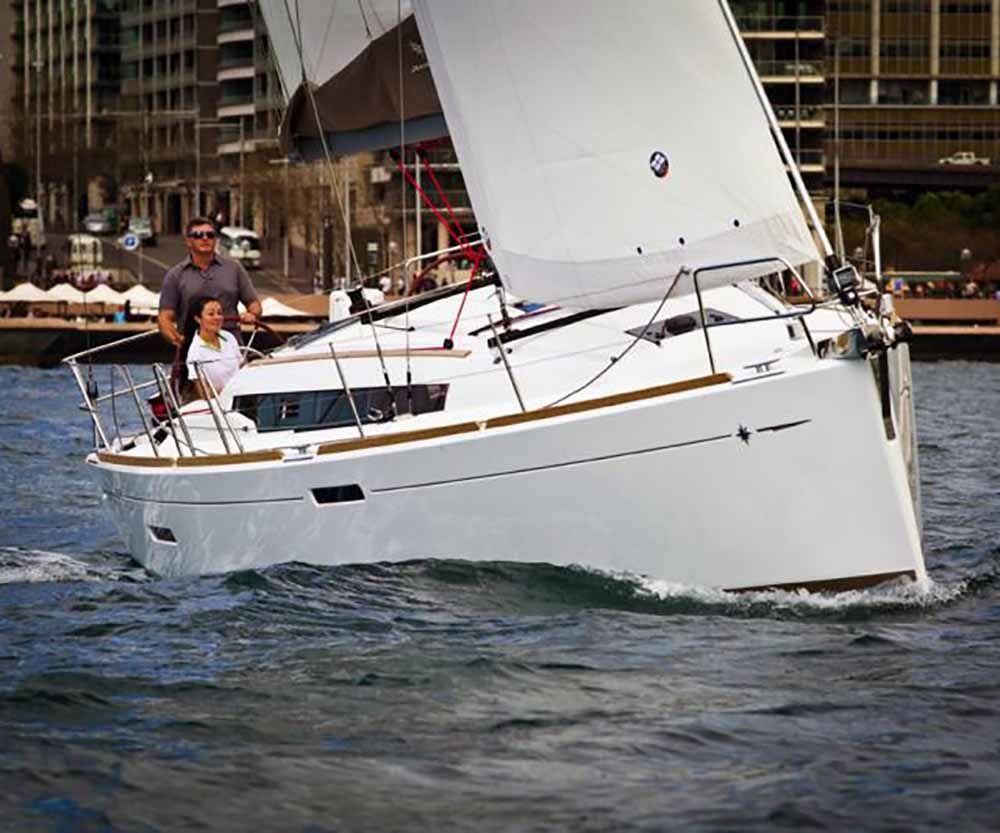
Hanse’s 388 emphasizes a tuned hull form and a single-rudder layout that promotes tracking and a slightly more traditional underwater profile, which delivers a pleasing balance between speed and seakeeping. In contrast, the Jeanneau 389 often trades a little of that tracking purity for broader interior volume and a dealer-friendly option set; Jeanneau’s layouts tend to feel roomier below and can be marginally cheaper on the used market for similar years.
From a buyer’s perspective the Hanse will suit someone who prizes a sprightlier sail feel and simpler steering hardware, while the Jeanneau will attract those who put interior comfort and options (and sometimes service network familiarity) at the top of their checklist. The Jeanneau may edge the Hanse on resale velocity in markets where immediate turnkey interior finish matters, but the Hanse 388 generally wins on passage performance per dollar when similarly equipped.
► Learn more about de Jeanneau Sun Odyssey 389
Hanse 388 vs Beneteau Oceanis 38.1
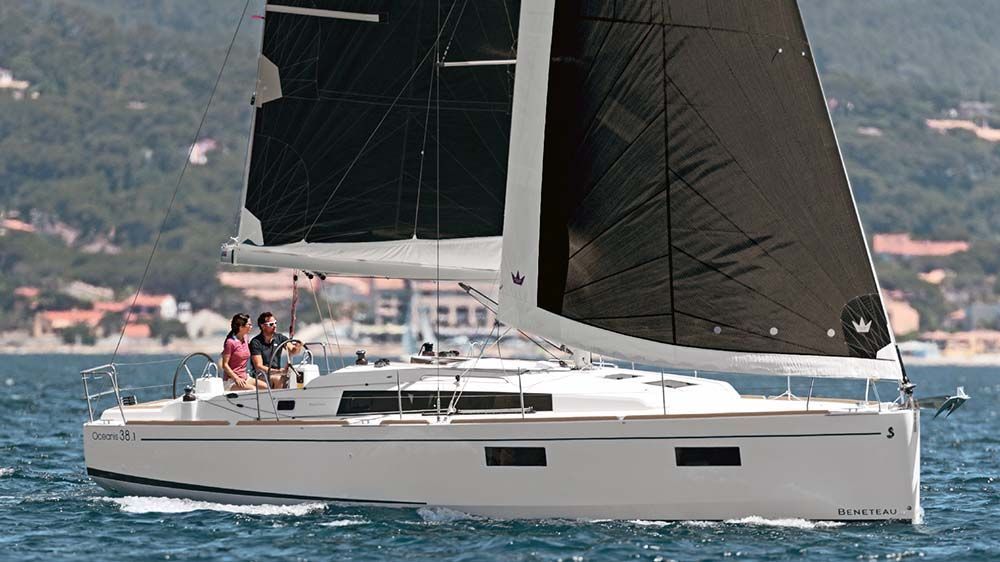
The Hanse 388 leans into a somewhat more performance-tilted hull and a simplified deck layout that makes short-handed sailing straightforward; Beneteau’s Oceanis 38.1 counters with highly modern interior arrangements, modular furniture options and a styling package aimed at immediate owner comfort out of the box. Sailing behavior is comparable in decent breeze, but the Hanse’s deeper keel variants and tuned rig often give it a sharper feel upwind, while the Oceanis can feel roomier and more “finished” at the dock.
For ownership costs and maintenance, Hanse’s simpler hardware choices and conservative hull detailing can reduce long-term friction; Beneteau’s higher perceived specification can command higher asking prices (and higher expectations at survey), so buyers should weigh immediate onboard comfort against longer-term serviceability and parts accessibility.
► Learn more about de Beneteau Oceanis 38.1
Hanse 388 vs Dufour 382 Grand Large
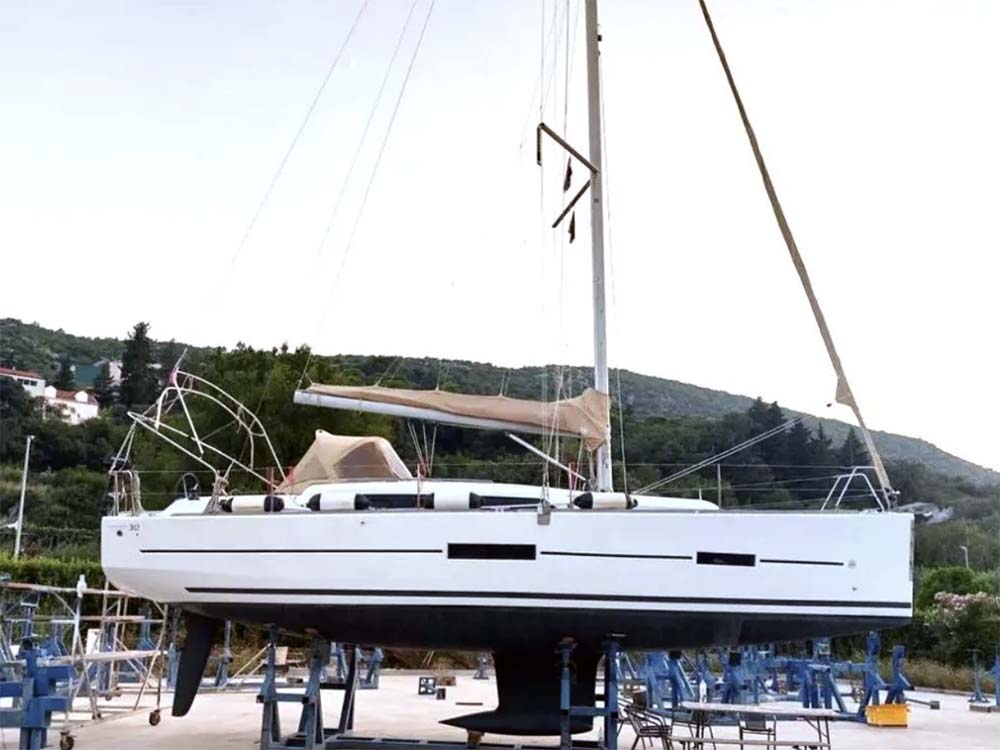
Compared with the Dufour 382 Grand Large, the Hanse 388 trades Dufour’s often more aggressively tuned laminate and hull-shape choices for a slightly more conservative but dependable cruising balance; Dufour’s emphasis on performance construction (vacuum lamination, sport-lean setups) can reward light-air speed and stiffness. That means performance-minded owners who prioritize race-adjacent performance and sharp light-air behavior may prefer Dufour, while owners who want simpler systems and a predictable servicing path will lean toward the Hanse.
In practical ownership terms, Dufour boats can be more expensive to refit to a high spec and sometimes command higher initial prices, while the Hanse 388 typically offers good sailing performance for a slightly lower lifecycle cost — important when the buyer budgets for periodic rigging, sailcare and electronics upgrades.
► Learn more about de Dufour 382 Grand Large
Maintenance Costs of a Hanse 388 in the U.S.
Below are typical annual costs and notable one-time items you should budget for; ranges are approximate and depend on region, condition and owner skill.
- Mooring / slip or storage — $3,000–$18,000/year (marina fees vary dramatically: New England and California at higher end; many Gulf/South locations are lower).
- Insurance — $900–$3,500+/year based on coverage, cruising area and declared value.
- Engine servicing (routine) — $300–$1,200/year for annual checks; larger engine or saildrive work can push this higher.
- Antifouling & haul-out — $800–$4,000 per haul (regional variation, yard rates, and paint choices affect totals).
- Standing rigging inspection / replacement — inspection costs modest annually; full replacement every 10–15 years $6,000–$12,000+ depending on rig and hardware.
- Running rigging and sails — annual small repairs $200–$1,500; new sails (main + headsail) $3,000–$8,000+ for quality cruising cuts.
- Saildrive / lower unit maintenance — saildrives require periodic seal servicing and lower-unit servicing; full seal service or lower-unit work can be $800–$3,000+ depending on haul and parts.
- Electronics & safety — chartplotter/AIS/autopilot updates $2,000–$10,000 if modernizing; liferaft and EPIRB add extra one-time outlays.
- Survey / unforeseen repairs reserve — set aside $1,000–$5,000/year for ongoing repairs and survey-identified items.
Region drives the biggest differences — haul and yard labor in the Northeast or Pacific Coast are the costliest line items. Owners who can do mechanical and systems work themselves materially reduce annual bills; otherwise professional labor becomes the dominant recurring expense. For a well-maintained Hanse 388 expect overall running costs to be medium for the size class: higher than an older, simpler domestic 38-footer but typically lower than high-spec blue-water or racer/cruiser yachts. Upgrades made before sale (standing rigging, sails, electronics) tend to improve resale value more than cosmetic work.
Conclusion
The Hanse 388 is a balanced proposition: it blends a tuned hull and tidy deck ergonomics with a practical, modern interior and enough option flexibility to suit cruising couples and small families. Its strengths are sailing performance for the size, straightforward systems that favor owner servicing, and the backing of a strong owner community and healthy dealer listings that sustain resale liquidity. Weaknesses are those typical of modern production boats — a need to watch saildrive service intervals, inspect rudder/attachment areas and be disciplined about deck-penetration maintenance — but none of these are fatal if they’re addressed during a pre-purchase survey. For U.S. buyers seeking a comfortable, fast coastal cruiser that is easy to short-hand and fairly economical to maintain relative to premium Mediterranean rivals, the 388 is a very credible option and represents a sensible compromise between performance and liveability. With sensible survey work and an eye to routine saildrive/rigging maintenance, it is a model worth actively considering for coastal cruising and quick weekend passages, and it typically holds resale value well within its competitive band.
Specifications
| Hull Type | Fin w/bulb & spade rudder |
| Rigging Type | Fractional Sloop |
| LOA | 37.40 ft / 11.40 m |
| LOD | 36.06 ft / 10.99 m |
| LWL | 34.12 ft / 10.40 m |
| S.A. (reported) | 775.00 ft² / 72.00 m² |
| Beam | 12.80 ft / 3.90 m |
| Displacement | 18,232.00 lb / 8,270 kg |
| Ballast | 5,269.00 lb / 2,390 kg |
| Max Draft | 6.75 ft / 2.06 m |
| Construction | FG w/balsa sandwich |
| Ballast Type | Cast iron |
| First Built | 2017 |
| Builder | Hanse Yachts |
| Designer | Judel/Vrolijk & Co. |
| Auxiliary Power | Diesel; Saildrive, 29 HP |
| Fuel | 42 gals / 160 L |
| Water | 78 gals / 295 L |
| S.A. / Displ. | 17.97 |
| Bal. / Displ. | 28.90 |
| Disp. / Len. | 204.91 |
| Comfort Ratio | 26.91 |
| Capsize Screening Formula | 1.95 |
| S# | 2.66 |
| Hull Speed | 7.83 kn |
| Pounds/Inch Immersion | 1,560.51 pounds/inch |
| I | 48.88 ft / 14.90 m |
| J | 14.14 ft / 4.31 m |
| P | 46.92 ft / 14.30 m |
| E | 16.73 ft / 5.10 m |
| SPL/TPS | 15.09 ft / 4.60 m |
| ISP | 50.92 ft / 15.52 m |
| S.A. Fore | 345.58 ft² / 32.11 m² |
| S.A. Main | 392.49 ft² / 36.46 m² |
| S.A. Total | 738.07 ft² / 68.57 m² |
| S.A./Displ. (calc.) | 17.11 |
| Est. Forestay Length | 50.88 ft / 15.51 m |
| Mast Height from DWL | 57.75 ft / 17.60 m |
Disclaimer
The considerations and analyses presented regarding the Hanse 388 sailboat are of a general nature and are based on the available information and technical data on this model, interpreted to the best of our knowledge and understanding. It is important to note that the specific characteristics of any particular sailboat may vary due to custom modifications, maintenance performed, and conditions of use over time, among other factors. Therefore, the details and performance of the boat you are considering may not exactly match the information provided here.
We strongly recommend that, before making any purchasing or usage decisions, you conduct a detailed inspection of the boat in question, consult with nautical professionals and other sailors, and consider your personal needs, expectations, and capabilities. Each sailboat may have unique particularities that affect its performance and suitability for different types of sailing and sailors.
The information contained in this analysis should be used as a general guide and not as a definitive reference. Professional evaluation and personal inspection are essential to ensure that the boat meets your specific requirements and expectations.