



The Catalina 42 MkII is the evolution of one of the best-selling American production cruisers—a family-oriented coastal passagemaker introduced as the MkII update to the original Catalina 42. Designed under the long stewardship of Gerry Douglas for Catalina Yachts, the MkII refined cockpit ergonomics, light and ventilation and a rounded transom while keeping the platform’s core emphasis: “as much boat as possible for the money.” The result is a boat that was aimed primarily at couples and families who wanted comfortable, easy-to-handle cruising with the option of three cabins, and it has remained popular on the used market for that reason; thousands of Catalina 42s (MkI and MkII combined) are on the water and the model continues to trade actively in broker listings.
Design and Construction
The Catalina 42 MkII follows a conservative American production recipe: a moderate-displacement hull with a fairly generous beam carried aft, a fin keel (or optional wing/shallow keel), and a spade rudder—choices that favor interior volume, good form stability and straightforward handling. The deck and systems were laid out for short-handed cruising: halyards, reefing and mainsheet lead to the cockpit (and were often arranged to be usable under a dodger), and the MkII increased cockpit stowage and revised the transom and rudder compared with the MkI. Construction is hand-laid fiberglass for the hull with a balsa-cored or composite deck (typical for the era), and structural loads are carried through localized reinforcements at the keel, chainplates and mast step. Those decisions make routine GRP repairs and upgrades relatively easy for yards and experienced owners, but they also put a premium on correct bedding and core maintenance around deck fittings—small survey items that strongly affect long-term durability and resale.
Performance
On the water the 42 MkII behaves like a sensible cruiser rather than a racer: it accelerates reasonably well in moderate air, holds hull speed near the theoretical number for its waterline, and tracks comfortably on passages. The hull’s displacement and ballast ratio give a steady, forgiving motion that many cruising couples prefer—less “lively” than a modern light-displacement European design, but noticeably more stable and confidence-inspiring than older, narrow full-keel cruisers. Upwind pointing is adequate for coastal passages and island hopping, and reef early to keep motion comfortable when the sea builds; in reach or run conditions the boat feels balanced and comfortable for watchkeeping. Compared with contemporaries it trades some outright speed for cargo capacity and tankage, but that is an intentional trade that suits owners who favor comfort and utility over club-racing performance.
Comfort and Accommodations
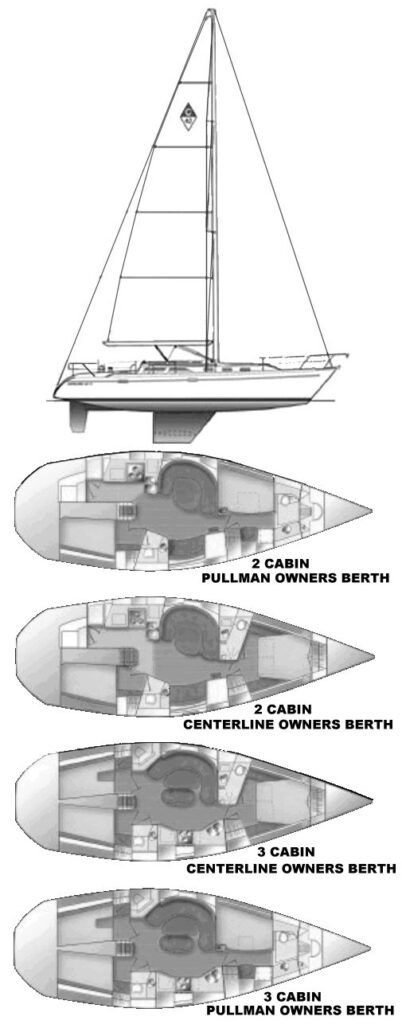
One of the 42 MkII’s strongest selling points is its below-decks usability: generous headroom, multiple layout options (two- or three-stateroom), large lockers and an owner-forward arrangement in many boats. The saloon is intentionally roomy, with settees and table arrangements that convert easily for additional berths, and the galley and nav station are placed to be practical for cruising couples and families. Ventilation and natural light are much improved on the MkII versus the MkI, and owners routinely report that the interior lives well for extended coastal cruising and even liveaboard seasons—with the caveat that owners who plan long ocean passages typically invest in refrigeration capacity, heating/insulation and additional solar or watermaker systems. Because so many examples were owner-equipped, it is common to see tasteful refits (modern electronics, upholstery, and galley upgrades) that materially improve liveability and resale.
Safety and Practicality
Practical safety features are baked into the Catalina 42 MkII’s layout: wide side decks, handholds, a cockpit designed for sheltered work and sail controls led to the cockpit for short-handed operations. The fin-keel and spade rudder provide a responsive helm and good manoeuvrability in marinas, but the unprotected rudder and production-boat chainplate arrangements mean owners should be disciplined about avoiding grounding and vigilant about bedding and inspection. Systems access (engine, tanks, through-hulls) was designed to be owner-friendly, which lowers day-to-day maintenance costs; however, long-range or bluewater aspirations require careful upgrades—especially reinforcement or inspection around deck fittings and the mast step—before committing to offshore passages. The boat’s balance of safety, simple systems and roomy accommodations makes it especially well suited to coastal passagemaking and extended coastal cruising with an experienced owner/operator.
Known Issues with the Catalina 42 MkII
Owners and surveyors consistently call out a handful of recurring issues to watch for. Leaky chainplates, poor bedding around deck hardware and voids between the inner liner and deck core that can hide slow leaks are common forum topics; when left unattended these issues can lead to soft core and localized structural repairs. Other normal aging items include tired engine mounts, dated exhaust systems, worn upholstery and the predictable need to replace standing rigging and sails on a multi-year cycle. None of these are unique catastrophes—most are repairable and commonly addressed during a refit—but they are exactly the type of items a buyer should factor into price negotiations and survey contingencies (rebedding, localized core repair, rig inspection/re-tuning).
Market Availability and Pricing in the U.S.
The Catalina 42 MkII is out of production and only available used, but it shows up regularly on major broker sites and classifieds across the U.S., with concentrations in traditional cruising hubs—New England, the Mid-Atlantic, Florida and the West Coast. Asking prices on broker portals and classifieds vary with year, equipment and condition: recent listings show MkII examples advertised from roughly $65,000–$180,000, with lower-priced project boats and high-spec, late-model examples toward the top end of the range. Well-maintained boats with modern electronics, recent rigging and fresh bottoms command stronger offers and sell more quickly because of the model’s large owner community and proven general resale appeal.
Here is a comparison with three similar models commonly considered by cruisers:
| Model | LOA | Approx. Years Built | Typical US Used Price | Main Differences |
|---|---|---|---|---|
| Catalina 42 MkII | ≈43.2 ft | 1995–2008 | $65,000–$180,000 | American production cruiser focused on interior volume, practical systems and owner-serviceability. |
| Beneteau Oceanis 423 | ≈43.1 ft | 2003–2007 | $115,000–$160,000 | European lines, often lighter feel and a sailplan favoring performance-oriented cruising. |
| Hunter 44 AC | ≈43.3 ft | 2003–2008 | $70,000–$150,000 | B&R rig, roomy aft accommodation and American-style production features tuned for short-handed cruising. |
| Jeanneau Sun Odyssey 43 DS | ≈43.3 ft | 1994–2006 | $75,000–$140,000 | Deck-saloon layout with bright interior and balance between comfort and coastal passagemaking. |
Catalina 42 MkII vs Beneteau Oceanis 423
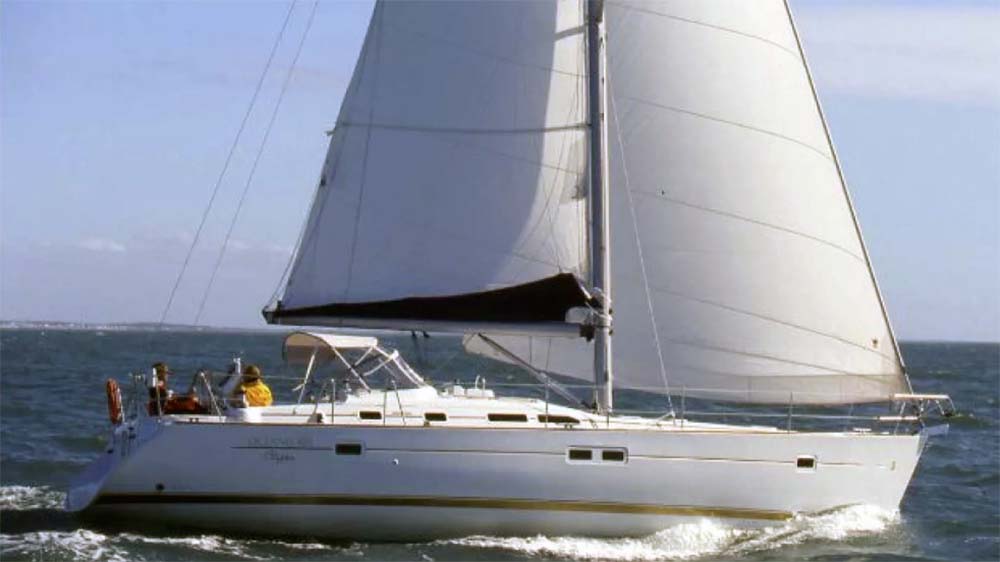
The Catalina’s strengths are in robust, proven American production design: roomy accommodations, conservative systems and an owner-serviceable layout that appeals to families and liveaboard couples. The Oceanis 423 leans more toward contemporary European hull shapes and finishes that can feel lighter and faster in lighter airs; buyers who value marginal sailing performance and modern European interiors may prefer the Beneteau, while those who prioritize easy maintenance, simple systems and interior volume will find the Catalina more practical.
From an ownership perspective the Catalina often costs less to maintain for owners who prefer doing their own work (spare parts and yard familiarity are widely available in the U.S.), whereas the Oceanis can demand more attention to imported electronics or specific rigging details—factors that should influence buying decisions as much as raw performance numbers.
► Learn more about de Beneteau Oceanis 423
Catalina 42 MkII vs Hunter 44 AC

Compared to the Hunter 44 AC, the Catalina tends to offer a more conservative hull feel and an emphasis on simplicity and longevity, while the Hunter pushes toward a roomier aft cabin and sailplan choices (B&R rig variants) aimed at short-handed cruising. Buyers who race occasionally or want a sportier feel under sail may prefer Hunter’s livelier mainsail-forward balance, but those who want a no-nonsense, well-documented platform with an extensive owner network often favor the Catalina.
Maintenance and survey concerns differ slightly: Hunters are often modified with performance or comfort upgrades that buyers should inspect, while Catalinas commonly require the usual bedding and deck-core attention but benefit from decades of owner experience and aftermarket solutions.
► Learn more about de Hunter 44 AC
Catalina 42 MkII vs Jeanneau Sun Odyssey 43 DS

The Jeanneau Sun Odyssey 43 DS emphasizes a deck-saloon, panoramic light and modern European styling that makes the interior feel more “yacht-like” for its length; the Catalina 42 MkII trades some of that stylistic flair for a more traditional American arrangement focused on functionality and serviceability. For coastal cruisers who value a bright saloon and hotel-style living spaces, the Jeanneau’s raised coachroof is attractive; for owners who want predictable systems, easier parts sourcing and a proven three-cabin option, the Catalina is frequently the more pragmatic choice.
In resale and marketability the two boats appeal to slightly different buyer pools—Jeanneau buyers often expect more recent electronic packages and cosmetic refits, while Catalina buyers prize structural robustness and a large, loyal owner community that helps keep parts and repair knowledge accessible.
► Learn more about de Jeanneau Sun Odyssey 43 DS
Maintenance Costs of a Catalina 42 MkII in the USA
A realistic annual maintenance picture for a Catalina 42 MkII (40–44′ production cruiser) — each item bolded with a short commented note:
- Mooring / Slip / Storage: $3,000–$18,000 per year depending on location (seasonal haul-outs, covered winter storage or premium slips in New England/California push costs to the top end).
- Insurance: $1,000–$3,500 annually depending on insured value, cruising range and deductibles; coastal cruising and charter use raise premiums.
- Engine servicing & consumables: $500–$2,000 per year for routine oil, filters, belts and impeller; major engine work is a multi-thousand-dollar event.
- Antifouling & haul-out: $800–$3,000 per haul, frequency and paint choice vary by region and slip arrangements.
- Standing & running rigging (reserve): Budget $300–$1,000 annually into a reserve; full standing-rigging replacement every 10–15 years typically costs $3,000–$8,000+.
- Sails (amortized): $0–$6,000 per year amortized depending on condition and cruising profile; mains and primary headsails are major periodic costs.
- Electronics & batteries: $200–$2,500 per year amortized; a full modern chartplotter/AIS/radar refit can be $5k–$15k.
- Miscellaneous (plumbing, canvas, upholstery, gelcoat): $500–$4,000+ per year, very variable with owner preferences and age of the boat.
Significant one-time expenditures to budget for include major sail replacement, standing-rigging renewal, a full electronics upgrade, or localized structural repairs if survey uncovers deck-core or mast-step issues. Many Catalina owners can competently perform routine maintenance and cosmetic projects themselves (bedding fittings, varnish, simple electrical work), which lowers costs; structural core repairs, complex engine/transmission work and professional sail repairs will usually require yard or specialist intervention. Overall, for its size and purpose, expect medium ownership costs compared with contemporary 40–45′ production cruisers; careful pre-purchase inspection and proactive maintenance typically preserve resale value sufficiently to justify the investment.
Conclusion
The Catalina 42 MkII is a tried-and-true choice for buyers seeking a comfortable, roomy and practical coastal cruiser with proven longevity and an unusually large owner community. Its strengths are clear: sensible systems, multiple practical layouts (including three-stateroom options), owner-friendly access for routine maintenance and a design ethos that favors usable volume over marginal speed. The trade-offs are the usual production-boat maintenance considerations—bedding, deck-core vigilance, periodic rig and sail renewal—but these items are well understood in the market and commonly addressed in surveys and refits. For coastal cruising, liveaboard couples or families who want reliable comfort and a strong resale market, the Catalina 42 MkII is worth seeking out: buy with a thorough survey, budget for the usual attention items, and you’ll likely find a boat that delivers many seasons of practical, enjoyable cruising and retains its appeal to future buyers.
Specifications
| Hull Type | Fin w/ spade rudder |
| Rigging Type | Masthead Sloop |
| LOA | 41.86 ft / 12.76 m |
| LWL | 36.00 ft / 10.97 m |
| Sail Area (reported) | 797.00 ft² / 74.04 m² |
| Beam | 13.83 ft / 4.22 m |
| Displacement | 20,500 lb / 9,299 kg |
| Ballast | 8,300 lb / 3,765 kg |
| Max Draft | 6.67 ft / 2.03 m |
| Construction | Fiberglass (FG) |
| Ballast Type | Lead |
| First Built | 1995 |
| Number Built | ≈300 |
| Builder | Catalina Yachts (USA) |
| Designer | Gerry Douglas |
| Auxiliary Power (original) | Yanmar 4JH2E Diesel, 50 HP |
| Fuel Capacity | 38 gal / 144 L |
| Water Capacity | 138 gal / 522 L |
| S.A. / Displacement | 17.09 |
| Ballast / Displacement | 40.49 |
| Displacement / Length Ratio | 196.15 |
| Comfort Ratio | 25.38 |
| Capsize Screening Formula | 2.03 |
| S# | 2.76 |
| Hull Speed | 8.04 knots |
| Pounds/Inch Immersion | 1,778.98 lb/in |
| Rig Dimensions (I / J / P / E) | I: 53.00 ft / J: 16.42 ft / P: 46.75 ft / E: 15.50 ft |
| Sail Area – Foretriangle | 435.13 ft² / 40.42 m² |
| Sail Area – Mainsail | 362.31 ft² / 33.66 m² |
| Total Sail Area (100% Fore + Main) | 797.44 ft² / 74.08 m² |
| S.A. / Displacement (calculated) | 17.10 |
| Estimated Forestay Length | 55.49 ft / 16.91 m |
Disclaimer
The considerations and analyses presented regarding the Catalina 42 MkII sailboat are of a general nature and are based on the available information and technical data on this model, interpreted to the best of our knowledge and understanding. It is important to note that the specific characteristics of any particular sailboat may vary due to custom modifications, maintenance performed, and conditions of use over time, among other factors. Therefore, the details and performance of the boat you are considering may not exactly match the information provided here.
We strongly recommend that, before making any purchasing or usage decisions, you conduct a detailed inspection of the boat in question, consult with nautical professionals and other sailors, and consider your personal needs, expectations, and capabilities. Each sailboat may have unique particularities that affect its performance and suitability for different types of sailing and sailors.
The information contained in this analysis should be used as a general guide and not as a definitive reference. Professional evaluation and personal inspection are essential to ensure that the boat meets your specific requirements and expectations.