


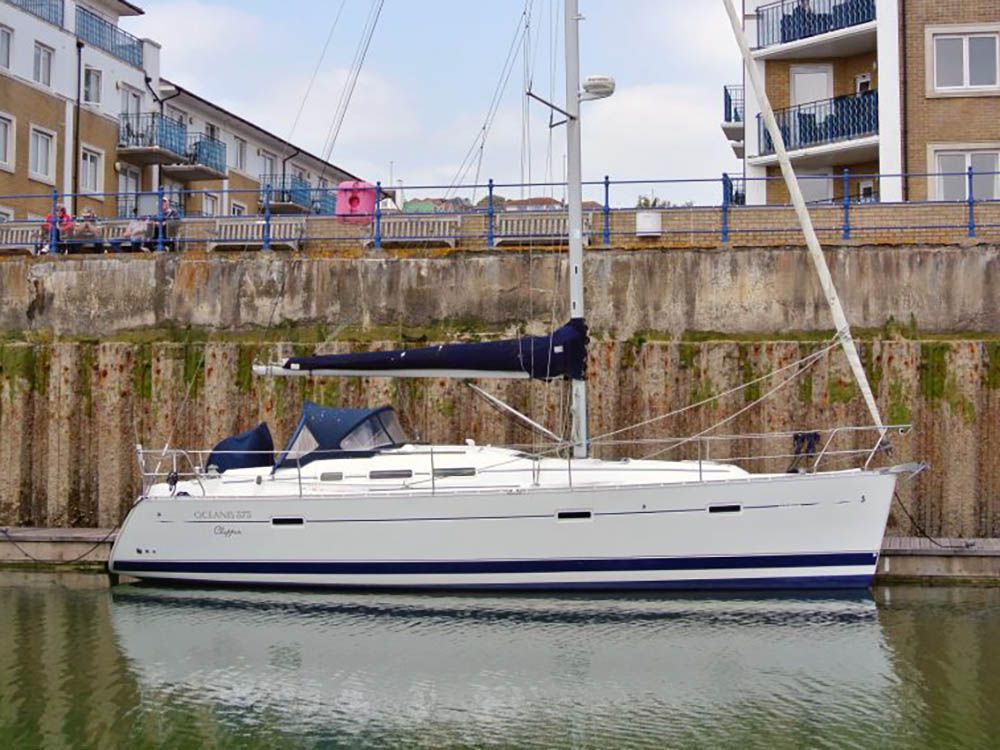
The Beneteau 373 arrived in the mid-2000s as a modern, production cruiser-racer aimed at sailors who wanted comfortable cruising without giving up decent performance. Designed by Berret-Racoupeau and built by Beneteau beginning around 2004, the 373 was intended to be an easy-to-sail family cruiser that could also be competitive in club racing when set up for it: a fractional-rigged sloop with a relatively beamy hull and an eye toward interior volume and light. That dual-purpose intent shows in the deck layout and sailplan—simple enough for short-handed cruising, but with enough sail area and a fin keel to reward a tuned rig. The model has found a steady second-hand market in the U.S.; it’s popular with coastal cruisers and owner-operators who value a roomy cockpit and modern accommodations, and you’ll also see a fair number of ex-charter and liveaboard examples listed for sale.
Design and Construction
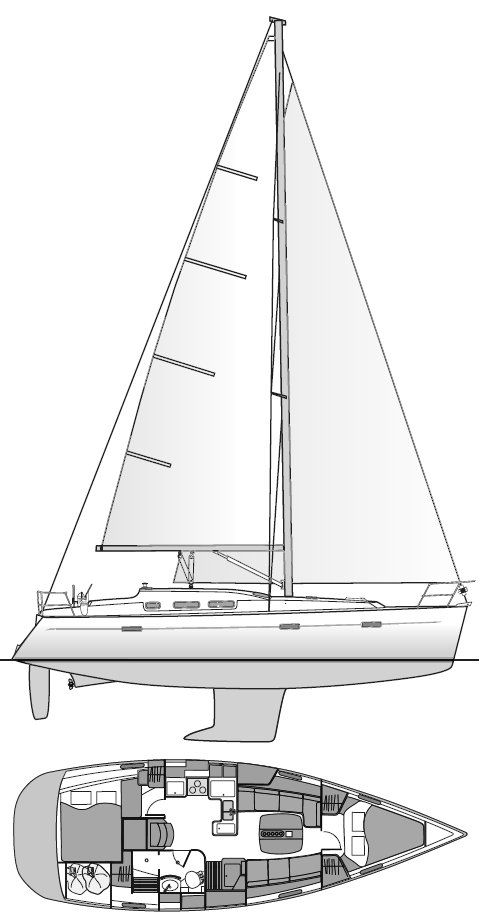
The 373 is built on a relatively conventional monohull with a fin keel and spade rudder—choices that favor good pointing ability and nimble steering over the ultimate directional stability of a full keel. The hull form is moderately beamy (beam ~12.3 ft) with a long waterline for its length overall (LOA ≈ 36.9 ft), which translates to useful interior volume and a hull that picks up speed in light airs without becoming unpleasantly tender. The standard rig is a fractional sloop—an arrangement that simplifies headsail handling (smaller jibs, larger mainsail control) and makes reefing and short-handed sailing easier. Construction uses hand-laid GRP (solid laminate where it counts, cored deck sections) with structural grid bonding of bulkheads and vinylester barrier coats in many factory builds to resist osmotic blistering—details that matter for long-term durability and for insurance underwriters.
From a practical-ownership perspective, these choices are balanced: the fin keel and spade rudder make the boat more responsive at the cost of vulnerability in a grounding (rudder and keel bolts must be checked in surveys). The composite layup and bonded bulkheads improve stiffness and reduce flex-related leaks, and parts for common systems (Yanmar diesel options, standard navigation electrics) are widely available—good for ease of repair and for preserving resale value. Buyers should inspect keel-to-hull interfaces, chainplate core sealing, and any evidence of past osmosis on older hulls, but overall the structural design is consistent with contemporary production yachts aimed at mixed cruising/racing use.
Performance
On the water the 373 tends to behave like a forgiving, moderately quick coastal cruiser. With a displacement around 14,600 lb and roughly 3,800 lb of ballast, it balances initial stability with enough reserve to carry sail in a blow; in 12–18 knots it will often cruise in the mid-6 to low-7 knot range under sail on a reach, and in lighter air the relatively long waterline helps momentum. The fractional rig and sailplan make sail area easy to depower: reef the main and you still have a workable headsail for upwind work, and the hull form allows reasonable pointing—its PHRF ratings are typically in a range that places it ahead of heavy family cruisers but behind a purpose-built racer.
In short, the 373 is not a race-winning thoroughbred but it’s a capable passage-making cruiser for coastal and short offshore trips: comfortable and predictable in a seaway, reasonably responsive on the helm, and simple enough to handle with a small crew. Compared with older, more conservative production cruisers it feels livelier; compared with modern performance cruisers it trades off top-end speed for easier systems and more interior comfort.
Comfort and Accommodations
Interior planning is one of the Beneteau 373’s strong suits. The layout favors a family or couple who want comfortable weekend sailing and the occasional extended cruise: generous saloon seating, a practical galley, and multiple sleeping cabins make the boat feel larger than its LOA suggests. Storage is decent for the class, and the large ports and hatches provide light and ventilation—important for liveaboard comfort in warm climates. Ergonomically, the cockpit and companionway are set up for easy movement when short-handing; the wheel and winch placements reduce the need to move fore and aft in typical sail changes.
For long-term liveaboard use some owners undertake modest refits (upgraded refrigeration, new cushions, cabin joinery touch-ups) because factory finishes from the era can show wear; that said, the interior generally ages well if moisture and condensation are managed. As a family cruiser the 373 strikes a useful balance: roomy enough for children or guests without feeling cramped, while retaining sensible passage-making features (navigation table space, engine access) that make cruising practical rather than aspirational.
Safety and Practicality
Deck hardware placement, a broad cockpit, and solid lifeline attachment points make the 373 straightforward to move about in moderate conditions. Steps like installing a proper traveler bridle, ensuring non-skid is sound, and fitting jacklines will make short-handed offshore work safer—those are common owner upgrades rather than factory omissions. Access to water (swim platform or ladder options on later builds) is practical for coastal leisure, and the typical engine installation (Yanmar 3-cylinder 40hp in many boats) is ample for docking and powering through tide and wind.
Systems are generally laid out for accessibility: the engine compartment, tanks and primary service points are reachable via companionway and saloon access. That accessibility reduces professional service time and cost for routine maintenance. For blue-water work some owners add redundancy in electrics, improve seacocks and hose runs, and upgrade navigation electronics—but for coastal to near-offshore cruising the stock configuration is reasonable with routine preventive maintenance.
Known Issues with the Beneteau 373
Owners’ discussions and surveys point to a handful of recurring items rather than systemic design failures. Commonly reported areas to watch are: chainplate and toerail core integrity (possible leaks if deck fittings weren’t properly bedded), occasional furling-drum or forestay wear on older roller furling headsails, and isolated reports of shaft-bearing/waterflow concerns around propeller/shaft anodes. Osmosis risk is low when the factory vinylester barrier was present, but older or refitted boats without that protection can show blistering; a careful survey looks for any past osmosis treatments. Electronics and interior gear are often owner-upgraded, so expect variability there.
Practical improvements owners commonly recommend include upgrading to a more efficient propeller (reducing drag under power), replacing older furling gear and standing rigging on time, and refreshing winches and running rigging in older boats. Structural reinforcements are rarely necessary, but checking the integrity of the rudder stock, keel bolts, and bulkhead bonds is essential at survey—these are preventative checks that pay off at purchase.
Market Availability and Pricing in the U.S.
The 373 is no longer in production and is primarily found on the pre-owned market. In the U.S. you’ll most commonly spot examples in Florida, California, and pockets of New England—areas with active coastal cruising cultures and a steady turnover of mid-2000s production boats. Current listings for mid-2000s, well-equipped boats commonly fall in a band roughly between $85,000 and $125,000, with lower prices for older or project hulls and higher for boats with recent refits or extensive electronics packages. That range aligns with active listings on mainstream brokers and classified sites, which show boats in the high-$80k to low-$110k bracket for typical 2004–2007 examples.
The Beneteau 373 sits competitively for buyers seeking modern lines and good interior volume; it usually lists at a premium to older, heavier cruisers (like many Catalinas from earlier decades) but is comparable to contemporary French and European production boats (Jeanneau, Dufour) of similar LOA and vintage. It generally offers a good value/price balance for coastal cruising and family use and tends to hold resale reasonably well if systems and hull are maintained—though market liquidity varies by region and the presence of ex-charter examples can push some prices down.
Below is a short comparison table that places the Beneteau 373 against three alternatives in the same size and era:
| Model | LOA | Approx. Years | Typical US Used Price | Key Differences |
|---|---|---|---|---|
| Beneteau 373 | 36.9 ft | ~2004–2007 | **$85,000–$125,000** | Modern interior volume; fractional rig; fin keel; European design focus. |
| Catalina 36 (MkII/III) | ~36 ft | 1985–2005 (various) | $40,000–$120,000 | Heavier, simple systems, strong owner support network; generally more conservative hull form. |
| Hunter 36 (various) | ~35–36 ft | 1990s–2000s | $45,000–$95,000 | Often more cockpit-focused layouts, B&R rigs on some models, typically user-friendly systems. |
| Jeanneau Sun Odyssey 35 | ~34.5–35.5 ft | 2000s | $60,000–$110,000 | Similar European design philosophy, emphasis on interior comfort and decent sailing performance. |
Beneteau 373 vs Catalina 36

The 373’s hull and rig philosophy lean more modern: a somewhat lighter displacement for the length, a fractional rig, and larger windows that emphasize interior comfort and visibility. In practical terms that means the 373 often feels more responsive and slightly faster in light to moderate conditions, while a Catalina 36 will typically feel more solid and forgiving in chop due to its heavier, more conservative hull.
For an owner thinking about maintenance and systems, Catalina models often have a reputation for simpler, more conservative fittings and a very large owner support network—useful if you prefer lower-tech fixes—whereas the Beneteau typically demands more attention to core sealing details and rig tuning, but rewards with more modern creature comforts and resale appeal to buyers seeking European styling.
► Learn more about de Catalina 36 MkI
► Learn more about de Catalina 36 Mk II
Beneteau 373 vs Hunter 36

Compared with many Hunter 36 variants, the 373 usually offers a crisper helm feel and a hull better optimized for upwind performance; the Hunter’s designs often focus more on cockpit ergonomics and ease of systems for casual weekenders. That difference plays out day to day: a couple looking to race modestly and cruise will appreciate the Beneteau’s sail plan and pointing, while a family prioritizing cockpit social space and ultra-simple systems might prefer the Hunter.
Maintenance and upgrades also diverge: Hunters commonly used B&R rigs in later models which can be trickier to tune and service for an inexperienced owner, whereas the Beneteau’s conventional fractional rig is straightforward but benefits from routine standing-rigging replacement and proper bedding of fittings to avoid leaks.
► Learn more about de Hunter 36
► Learn more about de Hunter 36 Legend
Beneteau 373 vs Jeanneau Sun Odyssey 35

These are close cousins in intent: both are European production cruisers with a focus on comfortable interiors, sensible deck layouts, and sailability for small crews. The 373 tends to offer a touch more interior volume and slightly different deck ergonomics compared with the Sun Odyssey variant, while Jeanneau’s models historically emphasize a balance between performance and cruising comfort that matches the Beneteau very closely.
For buyers, the choice often comes down to fit and finish, systems history, and local availability: both boats require the usual attention to standing and running rigging, seacock condition, and engine service, but neither demands unusual or expensive specialty work for normal coastal cruising. The resale market for both brands is similar—reasonable liquidity in cruising hubs, with price variation depending on equipment and refit level.
► Learn more about de Jeanneau Sun Odyssey 35
Maintenance Costs of a Beneteau 373 in the U.S.
Typical annual or recurring costs (annotated list; each item in bold with a short explanation):
- Mooring/Slip fees — Varies widely: $2,000–$12,000+ per year depending on region (lower in inland Gulf/coastal Southeast, higher in Northeast and California marinas).
- Insurance — $700–$2,500+ per year depending on coverage, cruising range, and owner experience; higher for offshore cruising.
- Engine servicing — $300–$1,200 per year for routine oil, filters, minor repairs; more if injectors or major systems need attention.
- Antifouling/haulout — $800–$3,000 yearly or every 1–3 years depending on region and bottom condition.
- Standing and running rigging — Replacement intervals vary: standing rigging typically every 10–15 years (one-time $3,000–$7,000+), running rigging and sails more frequent depending on use.
- Sail care/replacement — A new cruising suit can run $3,000–$10,000+; many owners stagger purchases (mainsail first, then headsails).
- Electronics and battery systems — Upgrades or replacements can be $1,000–$8,000+ depending on the extent (chartplotter, AIS, radar, lithium battery conversion).
- General maintenance & consumables — Miscellaneous parts, zincs, filters, anodes, gelcoat touchups: $500–$2,000+ annually.
Regional differences are significant: haulout and slip in New England or California are at the high end; DIY-friendly areas and trailerable or tender-based setups lower the recurring costs. Significant one-time costs to budget for include major sail replacement, standing rigging replacement, full electronics refit, or a substantial interior refit—each of these can push a multi-thousand-dollar bill. The 373 is generally manageable for competent owner-mechanics: engine, decks, and many systems are accessible, so owners who can do routine maintenance will save significantly. Overall cost of ownership for a boat this size and type is medium: not as cheap as smaller trailer-sailors, but not in the high range reserved for larger passagemakers; good resale and active demand for the model often help recoup sensible refit investments.
Conclusion
The Beneteau 373 presents a compelling package for buyers who want a modern-feeling, comfortable coastal cruiser that still sails with purpose. Its strengths are interior volume and thoughtful ergonomics, a sailplan that suits short-handed crews, and construction details that reflect contemporary production standards—qualities that make it well suited to couples, small families, and owner-operators who cruise coastally and occasionally step offshore. Weaknesses to consider are the usual ones for production boats of its era: variable build finish between individual examples, potential wet-deck/core sealing issues if not properly maintained, and the need to budget for periodic rig and sail renewals.
For a buyer prioritizing coastal cruising, weekend comfort, and a boat that balances performance with liveability, the 373 is worth seeking out—particularly if you can find an example with documented maintenance and sensible upgrades. It’s not the cheapest boat to own in absolute terms, but for its size and feature set it offers a reasonable value and a resale market among sailors who favor modern European production cruisers. If your goal is comfortable coastal cruising with occasional fast passages rather than club-level racing or transoceanic voyaging without modification, the 373 stands up well as a practical, thoughtfully designed choice.
Specifications
| Hull Type: | Fin Keel w/bulb |
| Rigging Type: | Fractional (9/10) Sloop |
| LOA (Length Overall): | 36.92 ft / 11.25 m |
| LOD (Length on Deck): | 36.08 ft / 11.00 m |
| LWL (Length at Waterline): | 32.80 ft / 10.00 m |
| Sail Area (reported): | 716.00 ft² / 66.52 m² |
| Beam: | 12.30 ft / 3.75 m |
| Displacement: | 14,617.00 lb / 6,630 kg |
| Ballast: | 3,867.00 lb / 1,754 kg |
| Max Draft: | 6.07 ft / 1.85 m |
| Construction: | GRP (Glass Reinforced Plastic) |
| Ballast Type: | Cast Iron |
| First Built: | 2004 |
| Builder: | Beneteau |
| Designer: | Berret/Racoupeau |
Auxiliary Power/Tanks (Original Equipment) | |
|---|---|
| Make: | Yanmar |
| Model: | 3JH4E |
| Type: | Diesel |
| HP: | 40 |
| Fuel Capacity: | 33 gals / 125 L |
Accommodations | |
| Water Capacity: | 99 gals / 374 L |
Sailboat Calculations | |
| S.A. / Displ.: | 19.23 |
| Bal. / Displ.: | 26.46 |
| Displ. / Len.: | 184.92 |
| Comfort Ratio: | 23.47 |
| Capsize Screening Formula: | 2.02 |
| Hull Speed: | 7.67 kn |
| Pounds/Inch Immersion: | 1,441.54 pounds/inch |
Rig and Sail Particulars | |
| I: | 44.72 ft / 13.63 m |
| J: | 13.92 ft / 4.24 m |
| P: | 41.00 ft / 12.50 m |
| E: | 14.42 ft / 4.40 m |
| S.A. Fore: | 311.25 ft² / 28.92 m² |
| S.A. Main: | 295.61 ft² / 27.46 m² |
| S.A. Total (100% Fore + Main Triangles): | 606.86 ft² / 56.38 m² |
| S.A./Displ. (calc.): | 16.30 |
| Est. Forestay Length: | 46.84 ft / 14.28 m |
| Mast Height from DWL: | 50.85 ft / 15.50 m |
Disclaimer
The considerations and analyses presented regarding the Beneteau 373 sailboat are of a general nature and are based on the available information and technical data on this model, interpreted to the best of our knowledge and understanding. It is important to note that the specific characteristics of any particular sailboat may vary due to custom modifications, maintenance performed, and conditions of use over time, among other factors. Therefore, the details and performance of the boat you are considering may not exactly match the information provided here.
We strongly recommend that, before making any purchasing or usage decisions, you conduct a detailed inspection of the boat in question, consult with nautical professionals and other sailors, and consider your personal needs, expectations, and capabilities. Each sailboat may have unique particularities that affect its performance and suitability for different types of sailing and sailors.
The information contained in this analysis should be used as a general guide and not as a definitive reference. Professional evaluation and personal inspection are essential to ensure that the boat meets your specific requirements and expectations.