



The Hunter 26.5 is a mid-1980s American racer-cruiser intended for weekend coastal cruising and casual club racing. Built by Hunter Marine between 1985 and 1987 and attributed to the in-house Hunter Design Team, it arrived during a decade when light-displacement, fractional-rig sloops with workable interiors were winning over first-time owners and families. In concept, it splits the difference between spirited sailing and simple ownership: outboard propulsion, modest draft, and a cockpit-friendly deck plan. Today the model is long out of production and primarily a used-market value play; it’s popular with private owners, sailing clubs on lakes, and learn-to-sail programs that want a forgiving platform that still rewards trimming and helming skills. Expect stronger demand in regions with active club-racing scenes and plentiful slips on lakes and bays rather than in blue-water charter hubs.
Design and Construction
The hull is a fiberglass monohull with a fairly flat run aft for low wetted surface and easy planform, paired to either a shoal wing keel (most common) or a deeper fin; steering is via an internally mounted spade rudder on tiller. The standard sail plan is a fractional-rigged sloop with aluminum spars, which keeps headsails manageable and shifts power to the mainsail for easier depowering—useful for shorthanded crews and gusty afternoons. Construction is conventional solid glass with cored deck areas; systems are intentionally simple and centered around an outboard well or bracket. These choices keep weight down and simplify future repair—gelcoat work, rebedding deck hardware, and rudder bearing service are all straight-ahead DIY jobs compared with more complex cruiser-racers. The wing keel’s low center of gravity improves initial stability and helps the boat stand up to sail, while the external ballast and separate foil mean keel-to-hull bedding and bolts are inspection points over time, as on many production boats of the era. The basic interior is open-plan with a V-berth forward, convertible saloon, compact galley and a portable-toilet head beneath the V—simple, light, and inexpensive to maintain.

Performance
Under sail, the 26.5 has an honest turn of speed for its size, reflected in PHRF ratings that typically fall around 189–204 depending on region. In 10–15 knots it will keep pace with Catalina/O’Day/Pearson peers, and the fractional rig responds well to vang, traveler, and mainsheet trim when the breeze builds. The wing-keel version maintains decent pointing for a shoal boat if the foil is fair and the sails are reasonably fresh; the optional deep-fin gains a few degrees to windward and feels livelier through chop. In a lumpy bay the light displacement can hobby-horse, but the low-drag underbody accelerates quickly out of tacks and rewards active weight placement. Helm feel is light and direct on the tiller, making it a friendly teacher for new helms while still engaging for racers. Expect a practical hull speed in the mid-6-knot range and downwind speeds that belie its LOA when pressed under asymmetricals or a poled-out jib.
Comfort and Accommodations
Inside, the layout suits a couple or small family for weekends: open V-berth forward, a convertible saloon double, and often a quarter-berth for a child or off-watch crew. The galley is minimal—sink, stove, and an ice box or cooler—so most owners cook simply or upgrade the cooler and add USB/12V conveniences. Ventilation is adequate through the companionway and ports; a canvas dodger and a 12V fan transform muggy nights at anchor. Underway, the open plan and tiller free up cockpit and saloon space, but head compartment privacy is limited because the standard head sits beneath or just abaft the V-berth. Materials are typical of the era (teak-and-holly sole veneers, molded liners), which hold up if kept dry; many examples on the market show light refurbishments—new cushions, LED lighting, or resurfaced countertops—that make a noticeable difference without heavy expense. Overall, it’s a comfortable weekender rather than a liveaboard platform, and it strikes a nice balance between usable space and low upkeep for a 26-footer.
Safety and Practicality
Deck ergonomics are straightforward: lifelines, pulpits, and a walk-through reverse transom make movement and water access easy. With the fractional rig and small headsails, sailhandling is forgiving for a two-person crew, and most boats are already set up with halyards led aft, topping lift, and a vang. Systems access is simple—outboard service at the stern, easily reached electrical panels, and short hose runs reduce time and cost when maintaining or troubleshooting. For navigation limits, it’s a coastal cruiser: stout enough for bays and nearshore hops in settled weather but not an offshore passagemaker without major upgrades in tankage, storm-sail options, and structural add-ons. Owners appreciate the boat’s manners under outboard power for docking and the swim-ladder access for MOB practice or water play, both strong safety-of-use points for families and schools.
Known Issues with the Hunter 26.5
On aging examples, the most common findings mirror other 1980s production boats: portlight and deck-hardware leaks (including chainplates and mast-step sealant), localized core moisture if leaks went unaddressed, and keel-to-hull bedding that merits inspection. Owners of the 26.5 specifically have reported rainwater seepage at the aft cabin roof and advise rebedding suspect fittings methodically; compression-post sealant and surrounding structure on similar Hunters have also been serviced when leaks persisted. Keel trailing-edge fairness varies by boat; several owners have faired and sealed the wing to reduce drag and arrest corrosion where applicable. Electronics are often original and due for replacement, and standing rigging should be age-verified even on lightly used boats. Practical upgrades many buyers pursue include rebedding or replacing portlights, updating running rigging and sail inventory, fairing/epoxy-sealing the keel, and refreshing the DC system (main breaker, battery monitor, LED nav lights). Taken together, these are manageable DIY-plus-yard projects that materially improve reliability and resale.
Market Availability and Pricing in the U.S.
The 26.5 is only available used, with listings appearing regularly across the Southeast, Mid-Atlantic, Great Lakes, and inland-lake markets; recent examples have been advertised in Tennessee/Kentucky lake country and mid-coast marinas. Condition ranges from tidy, sailed-regularly boats with updated outboards and sails to long-docked “project” offerings. As of recent U.S. listings, expect an asking-price band around $4,000–$15,000, with most clean, sail-away boats clustering roughly in the $6,000–$12,000 zone; exceptional refits or trailers can push the top end. Relative to peers, that’s competitive money for a fractional-rig, wing-keel 26–27-footer with a useable interior and simple systems, and resale is generally straightforward in active club-racing or lake markets.
Below are comparable coastal-cruising designs of similar vintage and intent; typical prices reflect current U.S. asking ranges for average, serviceable boats rather than museum-quality refits:
| Model | LOA | Approx. build years | Typical U.S. used price | Key differences |
|---|---|---|---|---|
| Hunter 26.5 | 26’7″ | 1985–1987 | $4k–$15k | Fractional sloop; wing or deep keel; simple outboard; lively club-racer/weekender. |
| Catalina 27 | 27’0″ | 1971–1991 | $4k–$12k (outliers higher) | Masthead sloop; heavier, forgiving motion; vast parts/owner support network. |
| O’Day 272 | 27’2″ | 1985–1989 | $5k–$15k (avg. ~$9k) | Shoal or wing keel; comfortable cockpit; often nicer interior joinery than peers. |
| Pearson 27 | 27’0″ | 1988–1991 | $12k–$20k (condition-dependent) | Usually inboard diesel and wheel; stiffer feel; more “cruiser” than “sporty.” |
Hunter 26.5 vs Catalina 27

From the waterline down, the Hunter’s wing-keel/shoal-draft option and fractional rig favor responsive handling in tight waters and easy depowering, while the Catalina’s deeper fin (common) and masthead plan deliver a steadier, heavier feel and larger overlapping headsails. The Hunter’s spade rudder and lighter displacement give it a quicker “pop” out of tacks, which shows in club courses with many maneuvers; the Catalina’s longer production run yielded many configurations, but in general it tracks more deliberately and points respectably with a good No. 1. Above deck, the 26.5’s simpler systems and outboard reduce maintenance and free cockpit space; many Catalina 27s carry inboards that add range and charging but also cost and complexity. Down below, the Catalina’s interior is roomier and more traditional, with more privacy around the head and often better storage, whereas the Hunter’s open plan feels airy but is optimized for shorter stays. For buyers who value light, tiller-driven sportiness and low ownership cost, the Hunter stands out; for those wanting “small big-boat” comforts and a massive spares/knowledge ecosystem, the Catalina remains a benchmark.
In practical ownership terms, the Hunter typically carries newer-style fractional-rig sail handling that beginners find intuitive (smaller jibs, active mainsail control), while the Catalina may require more winch work with overlapping genoas but rewards with drive in light air. Resale and support slightly favor the Catalina due to enormous fleet size, though clean Hunters sell readily where lake fleets and PHRF scenes are active. Maintenance skews lower on the Hunter (outboard service, fewer through-hulls), while the Catalina’s inboard boats bring winterization, shaft/seal, and fuel-system tasks. If your use case is trailer-assist moves between lakes or modest-cost berthing, the Hunter’s weight and systems are helpful; if you envision longer weekends with more stores and tankage, the Catalina’s volume pays dividends.
► Learn more about de Catalina 27
Hunter 26.5 vs O’Day 272
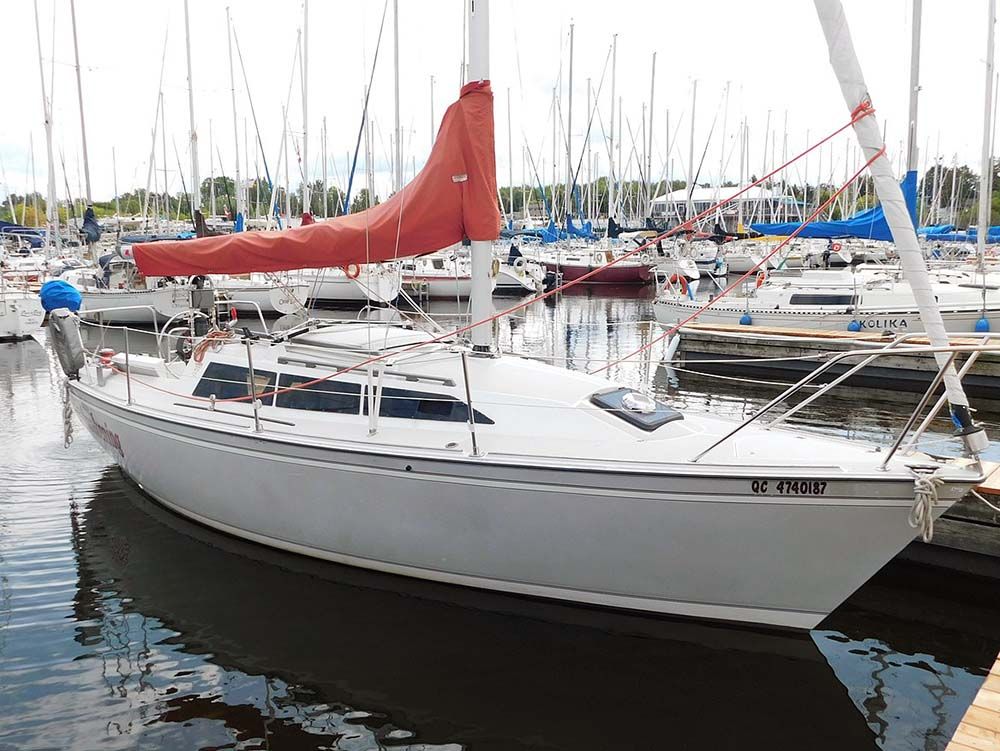
Both are late-’80s shoal-friendly coastal cruisers, but the Hunter’s fractional rig and lively underbody feel sportier around the buoys, whereas the O’Day 272 has a slightly more sedate temperament with emphasis on cockpit comfort. The Hunter’s tiller steering provides direct feedback that new racers appreciate; many O’Day 272s are likewise tiller-steered but feel a touch more damped due to displacement and keel plan. On interior tone, the O’Day often shows warmer joinery and a cozier saloon, while the Hunter keeps weight off and volume open—great for day-sailing with friends and simple overnights. Under power, outboards are common on both, keeping service costs contained; under sail, the Hunter typically accelerates quicker in puffs, while the O’Day tracks a bit more solidly reaching in chop. For lake clubs that run Wednesday-night beer can races and casual weekend raft-ups, the Hunter leans racier; for buyers leaning toward cockpit-centric social sailing with occasional cruising, the O’Day’s manners appeal.
Ownership calculus further separates them. Refit dollars on a 272 often go to cosmetic refreshes and sail inventory, while Hunters of this era commonly benefit from deck-hardware rebedding and keel-fairing attention. Pricing overlaps, but clean, updated O’Days sometimes ask slightly more than comparable Hunters; both, however, deliver strong value per dollar. If you prize a responsive helm and mainsail-centric trimming, the Hunter is the better teacher; if you want a calmer ride and a “sit-and-chat” cockpit for guests, the O’Day plays to that brief.
► Learn more about de O’Day 272
Hunter 26.5 vs Pearson 27

Compared with the Hunter’s outboard-simple ethos, the Pearson 27 often brings an inboard diesel, wheel steering, and a more “cruiser-proper” systems package—appealing for buyers planning longer weekends and shoulder-season runs. Under sail, the Pearson’s extra weight and underwater profile feel stiffer upwind and smoother through short chop, while the Hunter’s fractional rig and lighter displacement feel more eager to accelerate and more reactive to trim changes. Interior volume and finish typically favor the Pearson, which can justify its higher market price, but the Hunter’s open plan still works well for small families who pack light. For singlehanders or small crews, the Hunter’s sailhandling and tiller ergonomics make life easy; for crews who prioritize diesel range, charging, and a quieter cockpit under power, the Pearson’s inboard wins. Budget is a decider: the Pearson usually asks more up front and for engine-related upkeep; the Hunter keeps total cost of ownership lower.
In day-to-day ownership, the Hunter is the “sail more, service less” option—bottom paint, outboard tune, and running-rigging checks make up most annual work. The Pearson’s systems add comfort and capability but introduce periodic tasks (cooling, fuel, exhaust, shaft seal) and bigger-ticket replacements when that day comes. On the racecourse, regional PHRF treatment varies, but either boat can trophy with sail care and practiced crews; for easy dock-to-sail transitions and lively boathandling, the Hunter gets the nod. For buyers seeking a small cruiser that feels like a “real boat” below with diesel reassurance, the Pearson justifies the premium.
► Learn more about de Pearson 27
Maintenance Costs of Hunter 26.5 in the U.S.
- Slip/Mooring: $1,200–$3,000/year on inland lakes and rivers; $2,500–$5,500/year in high-demand coastal areas. Boats stored on racks or trailers can reduce this cost significantly.
- Insurance: $150–$400/year for hull and liability coverage on a 26–27’ boat from the 1980s; varies by region and declared value.
- Engine servicing (8–10 hp outboard): $150–$400/year for gear oil, spark plugs, impeller, and filter. Every 3–5 years, a more comprehensive service is recommended ($300–$700).
- Antifouling + haul-out: $600–$1,200/year in temperate regions; in colder waters with less fouling, it may be extended to every 18–24 months.
- Rigging and sails: Standing rigging inspection $250–$500/year; full replacement of shrouds/stays every 15–20 years $1,200–$2,500. A new set of cruising sails (mainsail + genoa) $2,500–$4,500; canvas and running rigging $200–$600/year.
- Electronics and electrical: Minimal upkeep $50–$200/year; one-time upgrades (VHF, wind/depth/speed instruments, GPS) $800–$3,000 depending on scope.
- Other (re-bedding ports/hardware, mast step seals, minor osmosis): DIY materials $150–$600/year; if outsourced, $500–$2,000 depending on extent.
Most owners can keep a 26.5 largely DIY thanks to its outboard engine, simple systems, and good access; outsourcing everything can double or triple the total. Overall, the annual cost falls into the low-to-mid range for its size, and resale value in active fleets (club racing/lake sailing) reasonably offsets investments in sails and watertightness.
Conclusion
As a package, the Hunter 26.5 delivers lively, mainsail-centric sailing, uncomplicated systems, and just enough interior for real weekends—precisely what many buyers want in their first “real” keelboat or a downsized family weekender. Its strengths are responsive handling, shallow-water access with the wing keel, a forgiving fractional rig, and ownership costs that stay sensible; its weaknesses are modest tankage, an interior more weekender than voyager, and the usual 1980s-boat punch-list of portlight/chainplate rebedding and periodic keel/hardware attention. For coastal day sailing, lake cruising, and club racing with a small crew, it hits a sweet spot; for offshore ambition, look bigger and heavier. If you value a fun helm, easy maintenance, and strong value per dollar, it’s absolutely worth seeking out—and clean examples tend to resell readily in active local fleets
Specifications
| Basic Characteristics | |
|---|---|
| Hull Type | Wing Keel |
| Rigging Type | Fractional Sloop |
| LOA | 26.58 ft / 8.10 m |
| LWL | 22.42 ft / 6.83 m |
| S.A. (reported) | 304.00 ft² / 28.24 m² |
| Beam | 9.00 ft / 2.74 m |
| Displacement | 4,400.00 lb / 1,996 kg |
| Ballast | 1,800.00 lb / 816 kg |
| Max Draft | 3.50 ft / 1.07 m |
| Construction | FG |
| First Built | 1985 |
| Last Built | 1987 |
| Builder | Hunter Marine (USA) |
| Designer | Hunter Design Team |
Accommodations | |
| Water Capacity | 23 gals / 87 L |
Sailboat Calculations & Definitions | |
| S.A. / Displ. | 18.17 |
| Bal. / Displ. | 40.91 |
| Disp: / Len | 174.30 |
| Comfort Ratio | 15.39 |
| Capsize Screening Formula | 2.20 |
| S# | 3.18 |
| Hull Speed | 6.34 kn |
| Pounds/Inch Immersion | 720.98 pounds/inch |
Rig and Sail Particulars | |
| I | 29.42 ft / 8.97 m |
| J | 9.42 ft / 2.87 m |
| P | 30.50 ft / 9.30 m |
| E | 10.83 ft / 3.30 m |
| S.A. Fore | 138.57 ft² / 12.87 m² |
| S.A. Main | 165.16 ft² / 15.34 m² |
| S.A. Total (100% Fore + Main Triangles) | 303.73 ft² / 28.22 m² |
| S.A./Displ. (calc.) | 18.15 |
| Estimated Forestay Length | 30.89 ft / 9.42 m |
| Mast Height from DWL | 38.75 ft / 11.81 m |
Disclaimer
The considerations and analyses presented regarding the Hunter 26.5 sailboat are of a general nature and are based on the available information and technical data on this model, interpreted to the best of our knowledge and understanding. It is important to note that the specific characteristics of any particular sailboat may vary due to custom modifications, maintenance performed, and conditions of use over time, among other factors. Therefore, the details and performance of the boat you are considering may not exactly match the information provided here.
We strongly recommend that, before making any purchasing or usage decisions, you conduct a detailed inspection of the boat in question, consult with nautical professionals and other sailors, and consider your personal needs, expectations, and capabilities. Each sailboat may have unique particularities that affect its performance and suitability for different types of sailing and sailors.
The information contained in this analysis should be used as a general guide and not as a definitive reference. Professional evaluation and personal inspection are essential to ensure that the boat meets your specific requirements and expectations.