



The Hunter 45 DS was designed as a comfort-first cruising yacht that blends roomy, light-filled accommodations with straightforward handling for short-handed crews. Launched in the mid-2000s by Hunter Marine, the Deck Salon (DS) variant targeted cruising couples and families who wanted exceptional interior volume, abundant natural light and easy living below while keeping a manageable deck layout for weekend and coastal passagemaking. The model carved out a niche in the used market among owners who value liveaboard comfort more than club-racing performance; it has been popular with private cruisers and couples converting to full-time cruising, and it also appears occasionally in the broker market for owners downsizing or trading up. In current demand the Hunter 45 DS attracts buyers seeking maximal interior comfort at a mid-40-foot length — those who prioritize day-to-day livability and low-stress handling over cutting-edge sailing metrics.
Design and Construction
Hunter’s DS approach places the salon up higher and extends the cabinhouse to create near-cathedral headroom and panoramic windows, and that architectural choice defines much of the boat’s character: a full-bodied hull with moderate beam, a fin keel (with shoal options available) and a spade rudder tuned for predictable, forgiving responses. The rig is a conventional fractional sloop set up for simplicity rather than racing—sail control and deck hardware are placed to favor easy movement and safe short-handed operation. Construction follows mass-production methods of the era: hand-laid or chopper-gun fiberglass laminates with reinforced grid beds and local solid laminates at major load points; these choices deliver a strong, repairable structure but concentrate weight compared with more performance-oriented, cored designs. From a naval-architecture standpoint the Hunter trades slenderness and low wetted surface for internal volume and righting moment; that increases comfort and tankage capacity while making the boat inherently robust and straightforward to maintain, which many buyers see as a practical long-term value.

Performance
On the water the Hunter 45 DS is steady and confidence-inspiring rather than sporty: its higher freeboard and taller coachroof increase windage, so pointing into a tight upwind angle is less competitive than on sleeker European cruisers, but the boat compensates with a soft, comfortable motion and good reserve buoyancy in confused seas. In moderate to fresh conditions the hull carries sail well and the boat exhibits predictable helm balance; in light airs it is slower to accelerate and benefits from a conservative sail plan or light-air sails to keep passages reasonable. Compared with contemporaries like performance-oriented Beneteaus or Jeanneaus, the Hunter is slower to windward but more comfortable downwind and in mixed sea states — a trade many cruising couples accept because it makes living aboard less fatiguing. Maneuverability at the dock is straightforward with the standard diesel and steering system, though owners often suggest prop and steering checks to minimize vibration and improve low-speed handling.
Comfort and Accommodations
The DS’s signature advantage is its interior: elevated salon, wraparound windows and generous headroom make living aboard feel airy and domestic rather than cramped. Layouts typically offer a full-beam owner’s cabin, a comfortable forward cabin and flexible saloon berths, with large tankage and plentiful lockers that support extended cruising without constant re-stowage. Galley ergonomics favor galley-down or mid-ship arrangements with work surfaces sized for cooking underway, and ventilation and natural light are abundant compared with many production cruisers. For couples or families planning extended cruising the Hunter’s interior performs exceptionally well, though serious bluewater voyagers sometimes exchange some interior niceties for additional structural or systems upgrades before long offshore passages.
Safety and Practicality
Deck ergonomics emphasize safe movement and easy access: wide sidedecks, solid handholds and a relatively deep cockpit create a secure working environment for typical coastal conditions and short offshore legs. The elevated salon does raise the center of gravity and windage, so prudent seamanship and reefing earlier are sensible in stronger weather; many owners fit strong jacklines and upgrade lifelines as part of an offshore-prep checklist. Systems access tends to be reasonable — the engine bay and mechanical systems are reachable without exotic disassembly — which lowers annual service time and cost compared to more intricately fitted yachts. Overall, the Hunter 45 DS is highly practical for coastal cruising and moderate offshore work with sensible safety upgrades; it is especially well suited to owners who value onboard comfort and simple day-to-day systems access.
Known Issues with the Hunter 45 DS
Reported issues are mostly maintenance- and design-tradeoff related rather than catastrophic failings: the raised cabinhouse and large windows can concentrate structural loads, so buyers should inspect bulkhead bonding and chainplate beds for signs of movement or water intrusion if sealants have been neglected. Windage-related handling in gusty conditions is commonly noted, and some older examples show cockpit drainage or scupper wear from deferred upkeep. Electronics and sail inventory are frequent upgrade items—many owners replace older instruments and sails to regain performance and reliability. Practical, commonly recommended improvements include propeller selection or repitching to reduce vibration and improve fuel economy, reinforcing chainplate areas during refits when wear is found, and upgrading navigation and redundancy for passage-making. These are manageable issues in a pre-purchase survey and typically do not indicate systemic design failure.
Market Availability and Pricing in the U.S.
The Hunter 45 DS is out of production and lives almost entirely on the used market; hulls built in the mid-2000s through early 2010s are the common vintages you’ll encounter. In the U.S., inventory clusters in Florida, the Southeast and select Mediterranean-style cruising hubs, with occasional listings in the Northeast and on the West Coast — regions where owners favored comfortable coastal cruising. Condition ranges from carefully maintained owner boats to examples needing cosmetic and systems refresh; as with any used yacht, history and survey findings drive price more than age alone. Typical asking prices depend heavily on equipment and condition; well-equipped, recently refitted examples command premiums, while boats needing mechanical or cosmetic work sit lower. Compared with similar mid-40-foot cruisers the Hunter often presents good value for buyers prioritizing interior volume and liveability, though resale can be somewhat niche because buyers who prioritize sailing performance may look instead at European brands with a performance edge.
Here’s a quick comparison with similar models:
| Model | LOA | Approx. Years Built | Typical US Used Price | Main Differences |
|---|---|---|---|---|
| Hunter 45 DS | ~45 ft | ~2004–2012 | $90,000–$220,000 | Deck-salon design with high headroom and light; prioritizes interior volume and comfort over light-air performance. |
| Jeanneau Sun Odyssey 439 | 43.9 ft | ~2011–2015 | $120,000–$230,000 | European performance-leaning cruiser; lighter displacement and crisper upwind ability than the Hunter. |
| Beneteau Oceanis 45 | 45 ft | ~2014–2018 | $170,000–$325,000 | Modern European cruiser with beam aft and emphasis on cockpit ergonomics; more balanced performance-to-comfort ratio. |
| Catalina 445 | 44.5 ft | ~2010–2016 | $265,000–$385,000 | American heavy-displacement cruiser with large tanks and tankage; favors durability and liveaboard systems. |
Hunter 45 DS vs Jeanneau Sun Odyssey 439
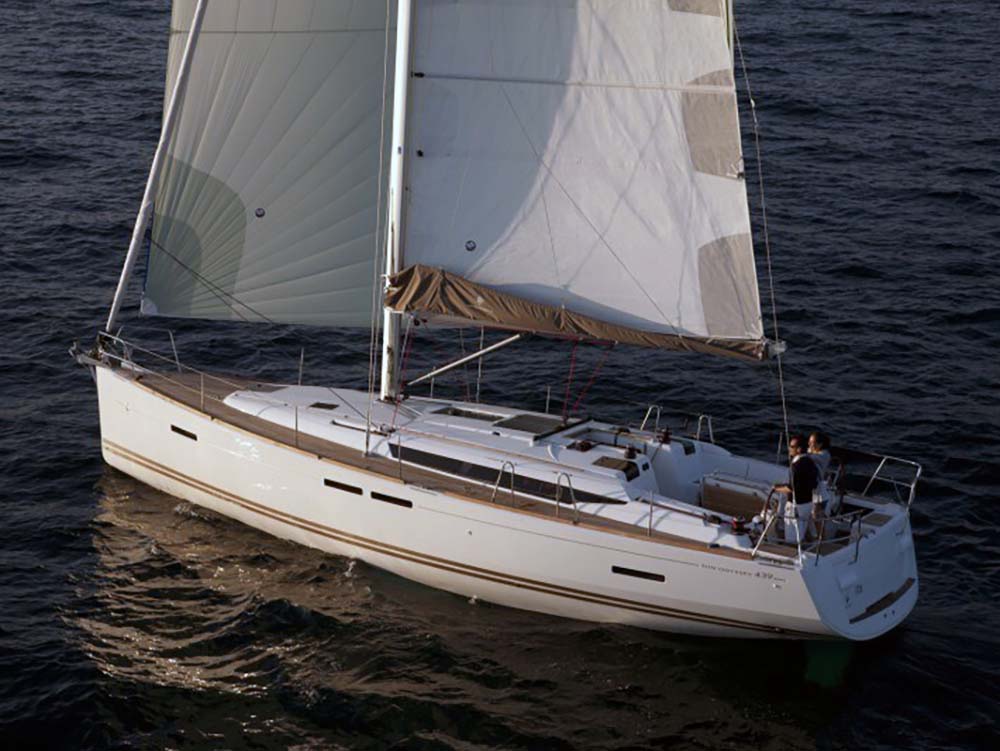
The Hunter’s deck-salon hull and elevated coachroof create exceptional below-decks volume and light compared with the Jeanneau’s sleeker, performance-oriented hull; this makes the Hunter feel more like a small floating home, while the Jeanneau rewards sailors with crisper helm feel and better light-air acceleration. For a buyer choosing between them, the Hunter is compelling if interior comfort and easy daily living are priorities, whereas the Sun Odyssey is the better choice for someone who values sharper passage-making and slightly lower displacement for improved upwind behavior.
In maintenance terms, the Jeanneau’s lighter, sometimes more complex European fit can require more attentive systems care and occasional specialist work, while the Hunter’s conservative systems and simpler access often reduce routine service time and cost—so ownership considerations hinge on whether the purchaser prefers living comfort or sailing performance.
► Learn more about de Jeanneau Sun Odyssey 439
Hunter 45 DS vs Beneteau Oceanis 45

Both boats aim at comfortable cruising, but the Oceanis 45 typically offers a more modern balance between onboard comfort and sailing manners: a beam carried aft and refined underwater sections give it livelier performance without sacrificing much interior space. The Hunter, however, provides more headroom and panoramic visibility in the salon, which translates to a more domestic feel below and stronger appeal for those prioritizing liveaboard comfort and social living spaces.
Practically, the Oceanis will likely be easier to sell to buyers seeking a modern European aesthetic and slightly better passage speeds, whereas the Hunter will attract those who want immediate liveability and simpler day-to-day systems — a trade-off between resale breadth and targeted comfort preferences.
► Learn more about de Beneteau Oceanis 45
Hunter 45 DS vs Catalina 445
Both the Hunter and the Catalina emphasize comfort and American-style liveability, but the Catalina generally leans heavier in displacement and tankage, offering a stiffer platform and larger provisioning capacity for extended voyaging. The Hunter’s advantage is light and airy internal spaces created by the deck salon; the Catalina trades some of that visual openness for larger tanks, heavier construction and a hull tuned for longer offshore legs with increased stiffness.
For buyers, the Catalina often represents a better choice if the primary goal is long-range cruising with greater tankage and a more conservative, heavy-duty build, while the Hunter is preferable for owners who want a bright, spacious interior and coastal-to-offshore flexibility with somewhat lower overall displacement.
► Learn more about de Catalina 445
Maintenance Costs of a Hunter 45 DS in the USA
Typical annual maintenance for a Hunter 45 DS depends on location, usage and owner skill level; below are recurring items with realistic ranges and notes:
- Mooring or slip fees: $3,000–$10,000 per year — marina fees vary considerably by region (cheaper in some Gulf ports, highest in New England/California).
- Insurance: $1,200–$3,500 per year — depends on hull value, cruising area and whether offshore coverage is required.
- Engine servicing: $500–$1,200 annually for routine servicing; major engine overhauls or transmission work can run $3,000–$6,000.
- Antifouling paint and haul-out: $1,000–$4,000 per year — frequency driven by local fouling rates and slip vs. tidal storage.
- Standing and running rigging inspection/replacement: $400–$1,000 per year for inspections; full standing rig replacement typically $5,000–$12,000 depending on mast/rig complexity.
- Sails (maintenance and replacement): $300–$1,000 per year for repairs and servicing; full sail replacement (main and working headsail) commonly $8,000–$18,000 depending on cloth and maker.
Regional differences are significant: yard labor and haul-out fees are materially higher in the Northeast and on the Pacific Coast compared with many southeastern yards. Significant one-time costs include major sail inventories, electronics refits (often $4,000–$12,000), propeller work or shaft replacement ($1,200–$6,000), and interior refits if cushions or finishes need replacement.
The Hunter 45 DS is reasonably owner-serviceable for routine cleaning, minor engine checks and cosmetic work, but professional services are recommended for rigging, composite repairs and major mechanical tasks; relying more on professionals increases annual costs. Overall, maintenance for a mid-40-foot DS is medium within its size class: neither bargain-basement cheap nor unusually expensive, with predictable costs if inspections and service are kept current. Resale recovery is decent for well-maintained boats, but because the Hunter appeals to a specific buyer profile (comfort-focused), buyers should expect slightly narrower market demand than universally performance-oriented models — still, good condition examples sell reliably to the right audience.
Conclusion
The Hunter 45 DS is a compelling proposition for buyers who place a premium on interior light, volume and everyday comfort without sacrificing the ability to make coastal passages. Its strengths lie in liveaboard ergonomics, straightforward systems access and a forgiving, confidence-building hull—qualities that make it ideal for cruising couples, families and those who prefer comfortable weekends or full-season cruising to club-level racing. Weaknesses are primarily the result of deliberate trade-offs: increased windage, somewhat reduced light-air performance and a resale pool concentrated among comfort-seeking buyers rather than pure performance hunters. For the prospective buyer seeking a comfortable, practical mid-40-foot cruiser that is easy to live with and maintain, the Hunter 45 DS is worth serious consideration; it represents a sensible purchase for coastal and moderate offshore use and will hold value for owners who maintain it conscientiously.
Specifications
| Hull Type: | Fin w/spade rudder |
| Rigging Type: | B&R |
| LOA: | 43.21 ft / 13.17 m |
| LOD: | 42.17 ft / 12.85 m |
| LWL: | 39.17 ft / 11.94 m |
| S.A. (reported): | 962.00 ft² / 89.37 m² |
| Beam: | 14.50 ft / 4.42 m |
| Displacement: | 22,936 lb / 10,404 kg |
| Ballast: | 7,237 lb / 3,283 kg |
| Max Draft: | 6.50 ft / 1.98 m |
| Construction: | Fiberglass (FG) |
| Ballast Type: | Lead keel |
| First Built: | 2006 |
| Builder: | Hunter Marine (USA) |
| Designer: | Glenn Henderson |
Auxiliary Power / Tanks (original equipment) | |
|---|---|
| Make: | Yanmar |
| Type: | Diesel |
| HP: | 54 |
| Fuel: | 74 gals / 280 L |
Accommodations | |
| Water: | 140 gals / 530 L |
| Headroom: | 7.00 ft / 2.13 m |
Sailboat Calculations | |
| S.A. / Displ.: | 19.14 |
| Bal. / Displ.: | 31.55 |
| Disp. / Len.: | 170.38 |
| Comfort Ratio: | 24.93 |
| Capsize Screening Formula: | 2.05 |
| S#: | 3.03 |
| Hull Speed: | 8.39 kn |
| Pounds/Inch Immersion: | 2,029.40 pounds/inch |
Rig and Sail Particulars | |
| I: | 47.93 ft / 14.61 m |
| J: | 14.67 ft / 4.47 m |
| P: | 46.50 ft / 14.17 m |
| E: | 20.75 ft / 6.32 m |
| S.A. Fore: | 351.57 ft² / 32.66 m² |
| S.A. Main: | 482.44 ft² / 44.82 m² |
| S.A. Total (100% Fore + Main Triangles): | 834.01 ft² / 77.48 m² |
| S.A. / Displ. (calc.): | 16.60 |
| Est. Forestay Length: | 50.12 ft / 15.28 m |
| Mast Height from DWL: | 57.33 ft / 17.47 m |
Disclaimer
The considerations and analyses presented regarding the Hunter 45 DS sailboat are of a general nature and are based on the available information and technical data on this model, interpreted to the best of our knowledge and understanding. It is important to note that the specific characteristics of any particular sailboat may vary due to custom modifications, maintenance performed, and conditions of use over time, among other factors. Therefore, the details and performance of the boat you are considering may not exactly match the information provided here.
We strongly recommend that, before making any purchasing or usage decisions, you conduct a detailed inspection of the boat in question, consult with nautical professionals and other sailors, and consider your personal needs, expectations, and capabilities. Each sailboat may have unique particularities that affect its performance and suitability for different types of sailing and sailors.
The information contained in this analysis should be used as a general guide and not as a definitive reference. Professional evaluation and personal inspection are essential to ensure that the boat meets your specific requirements and expectations.