


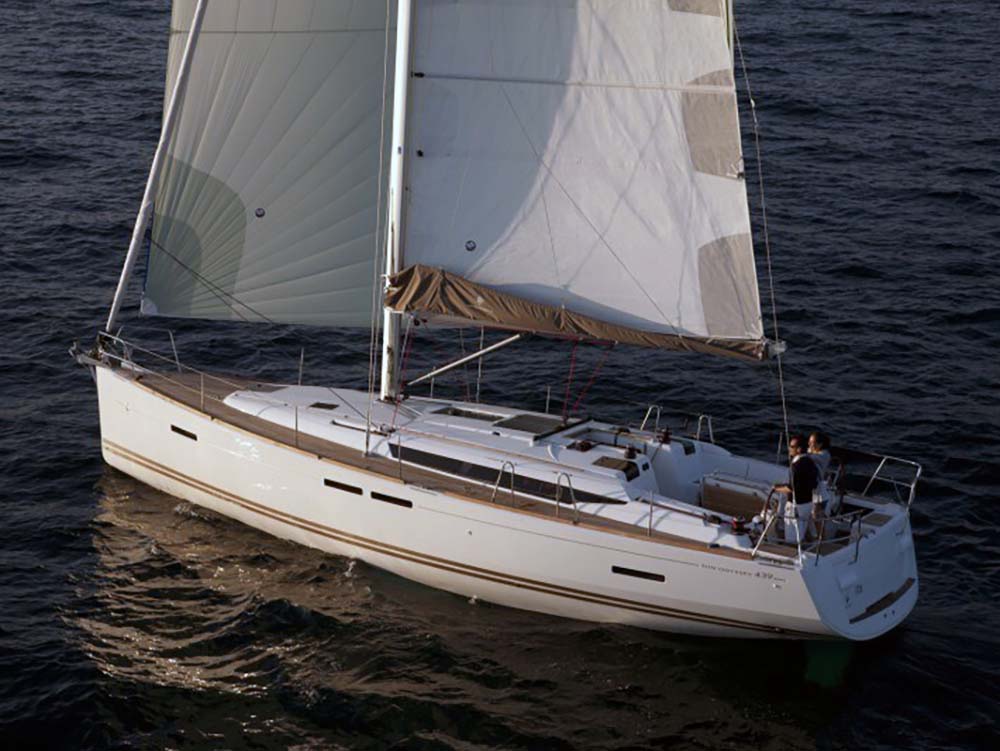
The Jeanneau Sun Odyssey 439 was conceived as a performance-minded cruiser that blends comfortable liveaboard accommodations with a sail plan and hull form that reward active sailing. Launched in the early 2010s and penned by Philippe Briand for Jeanneau, the design targets couples and small families who want a boat that is equally at home on relaxed coastal cruises and spirited passages. Its market niche sits between pure bluewater voyagers and club-racing designs: owners typically want easy handling, good downwind performance and an interior that supports extended weekends or seasonal cruising. On the used market the 439 has found steady demand among private buyers and owner-operators—less frequently owner-charter fleets—because it offers a modern layout and sailing manners that remain appealing in the secondhand market.
Design and Construction
The Sun Odyssey 439’s hull emphasizes a moderately beamy, easily driven form with a fin keel (several keel options were offered) and a balanced spade rudder that gives direct feedback at the helm. Its sloop rig is set up for simple, efficient sail handling; the deck is organized for short-handed use with sheet runs led aft and logical winch placement. Jeanneau employed solid fiberglass laminates in high-stress areas and cored composites in topsides and decks to control weight while keeping stiffness and comfort; these common production techniques yield a hull that is relatively straightforward to repair and maintain if cared for. From a naval architecture standpoint the boat balances a reasonable sail-area-to-displacement ratio with a comfort-oriented motion index, so the design trades absolute racing speed for forgiving handling and good load-carrying capacity—factors that reduce wear on gear and preserve long-term resale value.
Performance
Under sail the 439 tends to feel lively without being tetchy: in light airs it reaches hull-speed efficiently and in medium conditions it accelerates briskly off the wind, thanks to an efficient underwater profile and well-proportioned rig. The fin keel and spade rudder give good pointing ability and agile helm responses, though the boat is happiest in cruising trim rather than pushed flat-out; in a seaway it tracks predictably and permits confident depowering and sail changes. Compared to pure cruiser-racers of the same era the 439 usually sacrifices a little outright top-end speed for a more comfortable motion and easier single- or short-handed handling—traits many buyers prefer when family comfort and safety are priorities. Owners commonly praise it as a reliable mid-size cruiser: not the fastest in the marina, but a boat that will actually be sailed because it’s pleasant to handle.
Comfort and Accommodations
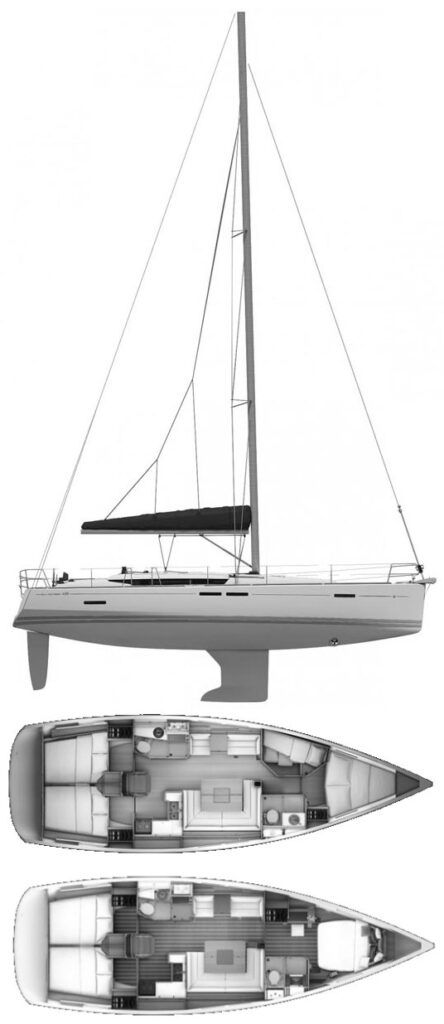
The interior of the 439 is arranged to feel roomy for a boat in the 43–44 foot range: generous saloon seating, well-proportioned bunks and a choice of two- or three-cabin layouts make it adaptable for a cruising couple, a family, or occasional guests. Storage and tankage were given attention in the original design, and the joinery finishes lean toward modern, light-toned woods and wide companionway openings that improve ventilation and light below. Ergonomically the galley and nav station are sized for real-world cruising tasks rather than nominal show-floor appeal, which matters when provisioning for extended trips. While long-term liveaboards will occasionally refit cushions, systems and electronics, the basic layout ages well—owners report that modest updates frequently restore a very comfortable onboard environment without major structural work.
Safety and Practicality
Deck layout and handholds are generally well considered for family cruising: walkways and coachroof geometry facilitate movement, and the cockpit is deep enough to feel secure when the boat heels. Cockpit winch placement and the option to lead lines aft make short-handed sailing practical; however, buyers planning true offshore work often upgrade safety gear, add stronger jacklines and review lifeline hardware as part of a bluewater readiness program. Systems access below—engine bay, tanks and through-hull fittings—tends to be straightforward, which reduces service time and cost relative to more bespoke interiors. Overall the 439 is well suited to coastal cruising and, with sensible upgrades and seamanship, to offshore passages; it is not a bare-bones passagemaker out of the box but a capable, adaptable cruiser.
Known Issues with the Jeanneau Sun Odyssey 439
Owners and forum discussions most commonly flag routine aging issues rather than any single catastrophic design fault: blistering (where boats have been stored improperly), soft spots from water ingress at deck fittings if sealant maintenance is neglected, and the usual wear items like standing rigging, chainplates and packing glands that require periodic attention. Electronics original to the build period often benefit from refreshes—chartplotter and instrument upgrades are common and improve reliability and resale desirability. Some owners recommend a propeller and shaft inspection or change to a more efficient or better-balanced prop to reduce vibration and improve fuel economy under power; reinforcing chainplate floors and keeping scuppets free are practical preventative measures. These are typical maintenance concerns on production cruisers of this era and generally manageable during a pre-purchase survey or through planned refit budgets.
Market Availability and Pricing in the U.S.
The Sun Odyssey 439 is no longer in current production and is primarily available on the used market; boats were built from about 2011 onward and many appear in U.S. listings where owners trade between coastal regions. In the U.S. you will most often see 439s in Florida, the Chesapeake/Mid-Atlantic and pockets of the West Coast and Great Lakes markets where performance cruisers are popular. Condition varies: listings range from well-kept private-owner boats to ex-charter or lightly maintained examples that need mechanical or cosmetic work. Based on current U.S. listings, typical asking prices generally fall in the $120,000–$230,000 range depending on year, systems and location.
Here’s a quick comparison with similar models:
| Model | LOA | Approx. Years Built | Typical US Used Price | Main Differences |
|---|---|---|---|---|
| Jeanneau Sun Odyssey 439 | 43.9 ft | ~2011–2015 | $120,000–$230,000 | Performance-leaning cruiser with modern layout, efficient hull; good short-handed systems. |
| Catalina 445 | 44.5 ft | ~2010s | $180,000–$320,000 | American-style roomy interior, heavy-displacement feel, emphasis on comfort and simplicity. |
| Hunter 45 Deck Salon | ~45 ft | 2000s (various) | $90,000–$220,000 | Deck-salon layout with high topsides and excellent light/headroom; higher windage, very roomy interior. |
| Beneteau Oceanis 45 | 45 ft | 2014–2018 | $170,000–$325,000 | European modern cruiser with emphasis on cockpit ergonomics and comfortable liveaboard features. |
Jeanneau Sun Odyssey 439 vs Catalina 445

The 439’s hull and rig prioritize a balance between performance and cruising comfort, which produces a more responsive helm and better upwind shape than the typically heavier, more comfort-focused Catalina 445. Where the Catalina emphasizes a roomy, conservative interior and systems that are easy to maintain, the 439 trades a bit of raw interior volume for lighter displacement and sharper sailing manners—meaning the Jeanneau will feel livelier on passage and often be preferred by owners who sail frequently and value passage-making speed.
From an ownership perspective the Catalina’s simplicity can lower day-to-day maintenance and appeal to owners who prize turnkey systems, while the 439’s European construction and slightly more complex systems may need more attentive servicing but reward owners with better passage performance and a more modern aesthetic.
► Learn more about de Catalina 445
Jeanneau Sun Odyssey 439 vs Hunter 45 DS (Deck Salon)

Compared with the Hunter 45 DS, the 439 presents a sleeker profile and more traditionally tuned underwater geometry that yields crisper handling and less windage when reaching or beating. The Hunter’s deck-salon concept wins on vertical space, daylight and liveaboard comfort—advantages for families or for owners who plan extended periods below—but that same tall cabin and higher topsides increase windage and can make the boat feel more tender in strong gusts.
Practically, buyers who prioritize interior living and visibility will lean toward the Hunter, while those who want a boat that behaves more like a performance cruiser under sail and is easier to manage single- or short-handed will find the Jeanneau a better match.
► Learn more about de Hunter 45 DS (Deck Salon)
Jeanneau Sun Odyssey 439 vs Beneteau Oceanis 45

The 439 and the Oceanis 45 share a modern cruising ethos, but the Oceanis generally pushes further toward maximum onboard comfort and cockpit ergonomics, with a beam carried aft that often translates into larger cockpit space and broader aft cabins. The Sun Odyssey 439, by contrast, retains slightly sportier lines and a hull that rewards active trimming and pointing, so owners who value sailing feedback and passage speed may prefer the Jeanneau.
For maintenance and ownership, the Oceanis’s focus on volume and finishing sometimes means more extensive interior systems to maintain, while the 439’s simpler, performance-leaning fit tends to result in straightforward servicing—so the choice becomes a trade-off between liveaboard luxury and sailing engagement.
► Learn more about de Beneteau Oceanis 45
Maintenance Costs of a Jeanneau Sun Odyssey 439 in the USA
Typical annual maintenance expenses for a 43–44 foot production cruiser vary by region and usage; below are the key recurring items with practical cost ranges and notes:
- Mooring or slip fees: $3,000–$12,000 per year — marina rates vary widely (lower in the Gulf, higher in New England/California).
- Insurance: $1,200–$3,500 per year — depends on coverage, hull value and cruising area (offshore endorsements raise premiums).
- Engine servicing: $500–$1,200 annually for routine service; $3,000–$7,000 for major overhauls every several years depending on work.
- Antifouling paint and haul-out: $1,200–$4,000 annually — frequency depends on water type and slip vs. seasonal haul-out.
- Standing and running rigging inspection/replacement: $400–$1,200 annual inspection/maintenance; full standing rig replacement roughly $6,000–$12,000 when required.
- Sails (maintenance and replacement): $300–$1,000 per year for repairs and servicing; new sail inventory (mainsail and 100–110% genoa) typically $8,000–$18,000 depending on cloth and maker.
Regional differences matter: boatyards and haul-out labor are more expensive in the Northeast and California than in many southeastern or Gulf Coast locations, and insurance costs rise for boats based in or frequently cruising high-traffic or storm-prone areas. Significant one-time costs buyers should budget for include major sail replacement, electronics refits (often $4,000–$12,000 for modern chartplotter, radar and sensors), propeller or shaft work, and interior refits if the seller has deferred upkeep.
A well-equipped Sun Odyssey 439 can be partly owner-maintained—owners commonly handle cleaning, basic engine checks, sail care and cosmetics—but professional services are typically required for rigging work, composite repairs and complicated systems servicing; relying heavily on professionals increases annual ownership costs. Overall, costs for a boat of this size and era are medium relative to other 43–45 foot production cruisers: not inexpensive, but predictable if routine maintenance is kept current. Strong market desirability for well-maintained examples generally helps resale value recover a reasonable portion of these investments over time.
Conclusion
The Catalina 470 is a pragmatic, well-considered choice for sailors who prioritize durability, systems accessibility and comfort for extended cruising or liveaboard life; its strengths are robust construction, ample tankage and a design that reduces the friction of ownership. Its compromises—less sporty handling in light airs and a heavier feel under sail—are deliberate tradeoffs that reward owners who value predictability and lower-maintenance systems over the last knots of speed. For couples or families planning serious coastal cruising or intermittent offshore passages, the 470 is worth seeking out: when bought after a careful survey and supported by sensible preventive maintenance, it represents a solid investment with stable resale appeal within its class.
Specifications
| Hull Type | Fin w/ bulb & spade rudder |
| Rigging Type | Fractional Sloop |
| LOA | 43.77 ft / 13.34 m |
| LWL | 39.37 ft / 12.00 m |
| Sail Area (reported) | 917.00 ft² / 85.19 m² |
| Beam | 13.91 ft / 4.24 m |
| Displacement | 21,781 lb / 9,880 kg |
| Ballast | 6,283 lb / 2,850 kg |
| Max Draft | 7.22 ft / 2.20 m |
| Construction | Fiberglass (FG) |
| Ballast Type | Iron |
| First Built | 2011 |
| Builder | Jeanneau (France) |
| Designer | Philippe Briand |
Auxiliary Power / Tanks (original equipment) | |
|---|---|
| Engine Make | Yanmar |
| Model | 4JH5-CE |
| Type | Diesel |
| Horsepower | 54 HP |
| Fuel Capacity | 53 gal / 201 L |
Accommodations | |
| Water Capacity | 87 gal / 329 L |
Sailboat Calculations | |
| S.A. / Displ. | 18.89 |
| Bal. / Displ. | 28.85 |
| Disp. / Len. | 159.34 |
| Comfort Ratio | 24.83 |
| Capsize Screening Formula | 2.00 |
| S# | 3.49 |
| Hull Speed | 8.41 knots |
| Pounds/Inch Immersion | 1,956.77 lb/inch |
Rig and Sail Particulars | |
| I | 54.46 ft / 16.60 m |
| J | 17.09 ft / 5.21 m |
| P | 52.49 ft / 16.00 m |
| E | 17.22 ft / 5.25 m |
| S.A. Fore | 465.36 ft² / 43.23 m² |
| S.A. Main | 451.94 ft² / 41.99 m² |
| S.A. Total (100% Fore + Main Triangles) | 917.30 ft² / 85.22 m² |
| S.A. / Displ. (calculated) | 18.89 |
| Estimated Forestay Length | 57.08 ft / 17.40 m |
Disclaimer
The considerations and analyses presented regarding the Jeanneau Sun Odyssey 439 sailboat are of a general nature and are based on the available information and technical data on this model, interpreted to the best of our knowledge and understanding. It is important to note that the specific characteristics of any particular sailboat may vary due to custom modifications, maintenance performed, and conditions of use over time, among other factors. Therefore, the details and performance of the boat you are considering may not exactly match the information provided here.
We strongly recommend that, before making any purchasing or usage decisions, you conduct a detailed inspection of the boat in question, consult with nautical professionals and other sailors, and consider your personal needs, expectations, and capabilities. Each sailboat may have unique particularities that affect its performance and suitability for different types of sailing and sailors.
The information contained in this analysis should be used as a general guide and not as a definitive reference. Professional evaluation and personal inspection are essential to ensure that the boat meets your specific requirements and expectations.