



The Catalina 445 was developed as a comfortable, American-style cruising yacht aimed squarely at couples and families who prioritize liveaboard comfort and simple, robust systems over cutting-edge racing performance. Introduced by Catalina Yachts in the 2010s, the 445 carries forward the brand’s emphasis on ergonomics and practical deckwork, making it appealing to sailors who want a straightforward ownership experience rather than a highly tuned performance boat. Its market appeal has been strongest with private cruiser-owners and bluewater-minded couples rather than charter fleets, and well-maintained examples remain in steady demand where owners value roomy interiors and conservative systems.
Design and Construction
Catalina’s design language for the 445 prioritizes interior volume and ease of use: a moderate-to-full displacement hull with a relatively generous beam carried well aft creates large living spaces below and a stable platform at anchor. The typical Catalina 445 sports a fin keel (with draft options) and a spade rudder, married to a fractional sloop rig that keeps sailhandling straightforward for short-handed crews. Construction follows mainstream production practice—solid fiberglass hull laminates below the waterline and cored decks—trading the lightest possible weight for durability and ease of repair in the field; that conservative approach simplifies long-term maintenance and makes structural patchwork (laminate or deck cores) accessible to many yards. From an architectural standpoint, the design deliberately favors a lower sail-area-to-displacement ratio and a higher comfort index than pure performance cruisers, which reduces gear loading and often lowers lifecycle costs for owners who cruise with family or gear.
These choices yield a boat that is forgiving under sail and predictable in a seaway, but also one whose larger topsides and flared ends produce more windage than sleeker European designs—an important trade-off to consider when comparing passage speeds versus liveaboard comfort.

Performance
On the water the Catalina 445 sails as its design intent suggests: comfortable and steady rather than razor-sharp. In light to moderate air it will make respectable passages on a reach or broad reach and maintain good comfort while doing so; in stronger conditions the heavier sections and fuller bow flair help dampen hobby-horsing but also mean she needs more sail area or careful trim to match the pace of lighter, performance-oriented cruisers. Pointing ability is adequate for coastal cruising but typically trails contemporaries with finer entries and deeper, high-aspect keels; maneuverability in tight marinas is straightforward thanks to a sensible rudder plan and manageable cockpit controls. Owners consistently report that the yacht’s calm motion and roomy cockpit make it pleasant for family cruising and extended weekends, even if outright racing-type sailors will find it less exciting than similarly sized European designs.
Comfort and Accommodations
Where the Catalina 445 really stands out is below: the layout emphasizes liveability with wide passageways, large berths, abundant locker space and a well-protected, practical galley. The deck-to-cabin transitions are smooth, and the deck salon or raised coachroof options (depending on model year and spec) increase natural light and ventilation—features that make extended time aboard materially more comfortable for families or cruisers planning longer seasons aboard. Storage and tankage are typically generous, and the joinery is built for utilitarian longevity rather than boutique aesthetics; as a result interiors age gracefully and many owners undertake cosmetic upgrades (cushions, heads upgrades, electronics) rather than structural overhauls. For liveaboard cruising the 445 is fully credible; as a weekend boat it feels indulgent, offering room and systems that reduce the friction of provisioning and sleeping aboard with guests.
Safety and Practicality
Deck ergonomics are a core strength: wide sidedecks, solid handholds and thoughtfully placed winches make movement under sail or in rough conditions straightforward for small crews. The cockpit is deep and secure, and the sail controls are often led to locations that facilitate single- or two-handed sailing without constant crew movement. From a systems perspective the Catalina philosophy favors simple, robust installations—accessible engine bays, straightforward plumbing runs and conventional electrical layouts—that reduce both diagnostic time and repair bills in remote haulout yards. While serious offshore sailors will typically add redundancy (liferaft, upgraded communications, backup instruments and beefed-up safety gear), the platform requires fewer immediate modifications to be safe for coastal and moderate offshore work compared with many production boats that prioritize light displacement over redundancy.
Known Issues with the Catalina 445
Reported problems are mostly the predictable consequences of production volume and the boat’s age rather than unique defects: water intrusion around deck fittings when sealants have been neglected, chafe in control lines where leads were not properly arranged, and routine wear to packing glands, chainplates and deck hardware. A few owners have noted issues with upholstery and joinery seams requiring attention after years of sun and moisture exposure—issues that are mostly cosmetic but worth checking during a survey. Commonly recommended upgrades include a more efficient propeller to reduce vibration and improve motoring economy, modern electronics refits to bring navigation up to contemporary standards, and occasional reinforcing or inspection of through-deck fittings near high loads; these are practical, well-known improvements that restore value and reliability without large structural work.
Market Availability and Pricing in the U.S.
The Catalina 445 is primarily a used-market model; new production has been episodic and many examples available today date to the 2010s. U.S. concentrations are strongest in Florida, the Southeast and parts of the West Coast—regions where comfortable coastal cruisers are popular—and listings typically range substantially by year, equipment and condition. Asking prices on broker sites and marketplaces commonly fall between $180,000 and $360,000 for well-equipped, recent examples, with lower-priced boats reflecting older systems or deferred maintenance and premium boats commanding higher premiums when updated for bluewater readiness or luxury refits. Compared to similarly sized European cruisers, the Catalina tends to trade at a modest premium when well cared for because buyers pay for turnkey liveability and simple systems that are inexpensive to maintain regionally.
Here’s a quick comparison with similar models:
| Model | LOA | Approx. Years Built | Typical US Used Price | Main Differences |
|---|---|---|---|---|
| Catalina 445 | 44.5 ft | ~2010–2016 | $265,000–$385,000 | Heavy-displacement, high ballast ratio, roomy American interior; emphasizes comfort and durability over outright speed. |
| Jeanneau Sun Odyssey 439 | 43.9 ft | ~2011–2015 | $120,000–$230,000 | Lighter, more performance-oriented hull; modern European layout and simpler systems favor active sailing and passage speed. |
| Beneteau Oceanis 45 | 45 ft | ~2014–2018 | $170,000–$325,000 | European cruiser with emphasis on cockpit ergonomics and liveaboard comforts; more volume aft, modern finishes. |
| Dufour 450 / 445 (Grand Large) | ~45 ft | ~2012–2018 | $150,000–$320,000 | Performance-cruiser leaning design: lighter displacement, emphasis on upwind ability and refined deck ergonomics for fast passagemaking. |
Catalina 445 vs Jeanneau Sun Odyssey 439
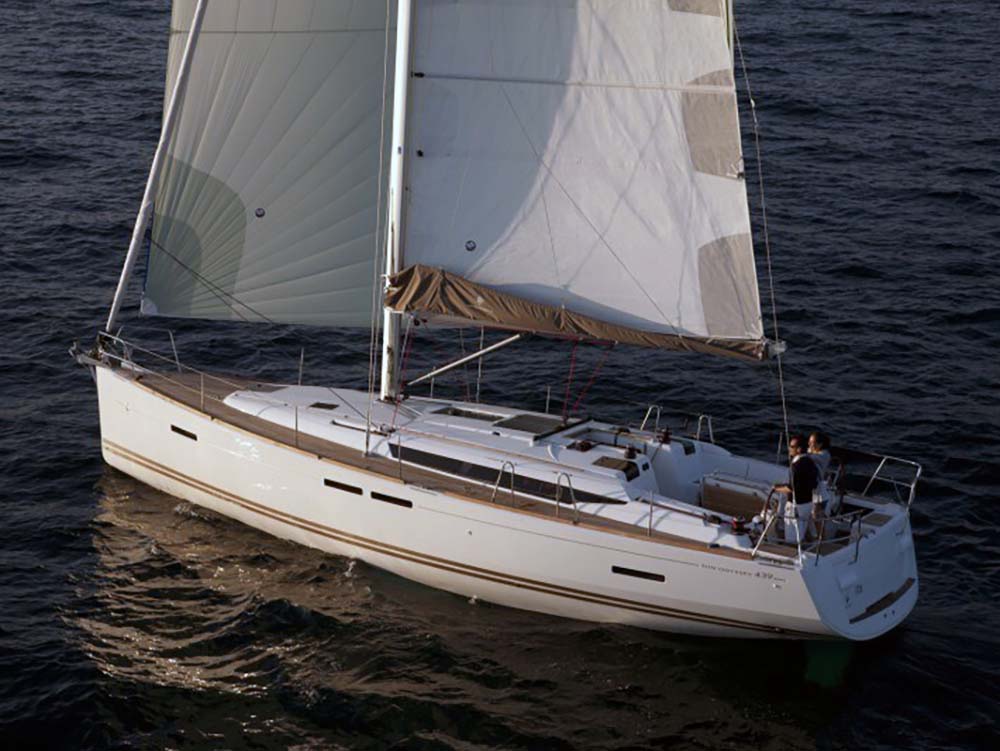
The 445’s heavier displacement, high ballast fraction and conservative hull form give it a steadier, stiffer ride that inspires confidence for family cruising and offshore passages, while the Jeanneau 439’s lighter, crisper hull and European tuning deliver a more responsive helm and typically better light-air performance. For buyers focused on interior volume, robust systems and a forgiving motion the Catalina outweighs the Jeanneau; conversely, sailors who prioritize passage speed, sharper pointing and simpler, lighter systems for single- or short-handed sailing will often prefer the Jeanneau’s feel and lower overall displacement.
Maintenance-wise the Catalina’s conservative systems and build philosophy tend to be easier for owner-operators to service without frequent specialist work, while the 439’s somewhat denser systems and composite techniques can require more attentive upkeep—so the practical ownership decision becomes a trade between comfort/durability and sailing engagement.
► Learn more about de Jeanneau Sun Odyssey 439
Catalina 445 vs Beneteau Oceanis 45

Both boats aim at comfortable cruising, but the Catalina pushes toward a heavier, more traditional American cruiser with a focus on stiffness and long-term durability, whereas the Oceanis 45 leans into modern European styling with a beam carried aft for maximum cockpit and aft-cabin volume. The Oceanis will often feel lighter on its feet and more modern in deck ergonomics—advantages for owners who sail frequently and want contemporary handling—while the Catalina’s build and tankage favor multi-season liveaboard use and more relaxed passage-making. Practically, the Catalina may command slightly higher maintenance predictability for long cruising seasons, whereas the Oceanis can offer better resale in markets favoring sleek European lines and slightly higher performance.
► Learn more about de Beneteau Oceanis 45
Catalina 445 vs Dufour 450 / 445 (Grand Large)

The Dufour model is conceived as a performance-leaning cruiser with a focus on hull efficiency and sail control systems that reward active trimming, giving it an advantage for owners who plan longer passages at speed. The Catalina conversely emphasizes a secure motion, interior comfort and conservative systems that reduce unpleasant surprises on a cruise. For a buyer whose priority is fast, efficient passages and club racing potential the Dufour’s layout and lighter displacement make it attractive; for someone who values onboard liveability, tankage, and robust systems that tolerate simpler maintenance, the Catalina 445 is the more practical, comfortable choice.
► Learn more about de Dufour 445 Grand Large
► Learn more about de Dufour 450 Grand Large
Maintenance Costs of a Catalina 445 in the USA
Typical annual maintenance for a mid-40-ft cruiser depends on region and usage; the following commented list shows recurring items and realistic ranges to budget for a Catalina 445:
- Mooring or slip fees: $3,000–$12,000 per year — marina season, location and amenities cause wide variation (Florida/Gulf often lower than New England/California).
- Insurance: $1,500–$4,000 per year — depends on cruising area, agreed value, and whether offshore endorsements are included.
- Engine servicing: $600–$1,500 annually for routine service; major overhauls or injectors/gearbox work can cost $3,000–$8,000.
- Antifouling paint and haul-out: $1,200–$4,500 per year — frequency depends on water type (warm fouling waters require more frequent work) and whether owners do bottom work themselves.
- Standing and running rigging inspection/replacement: $400–$1,200 annually for inspections and minor repairs; full standing rig replacement typically $6,000–$12,000 depending on mast and fittings.
- Sails (maintenance and replacement): $300–$1,200 per year for repairs; full sail inventory replacement (main and 100–135% headsail) often $8,000–$20,000 depending on cloth and reefing options.
Regional labor rates and yard availability materially affect these numbers: Northeast and Pacific Coast yards generally charge more labor than many Gulf and Southeast yards. Significant one-time costs to plan for include electronics refits ($4,000–$15,000 for modern chartplotter, radar and instrument suites), a new prop/shaft work ($1,200–$6,000 depending on scope), or interior refits and upholstery ($5,000–$25,000).
A Catalina 445 is reasonably owner-serviceable for chores like cleaning, basic engine checks and cosmetic projects, but rigging, composite repairs and major mechanical work commonly require professional yards—outsourcing these items raises total ownership costs. Overall the recurring costs for a Catalina 445 sit in the medium range for 44–46 foot cruisers: higher than smaller boats but predictable for a production vessel with generous tankage and heavier systems. Given Catalina’s reputation and the model’s continued market interest, resale values generally recover a respectable portion of invested maintenance on well-kept boats, making the investment defensible for owners who maintain a disciplined service schedule.
Conclusion
The Catalina 445 is a pragmatic, comfort-first cruiser that appeals to owners who prioritize a stable platform, large tanks, and systems that tolerate extensive use without frequent customization. Its principal strengths are a very stiff, reassuring hull form, an interior geared toward long-term liveaboard comfort, and production-built robustness that simplifies repairs and resale. Drawbacks, when compared with lighter European performance cruisers, are modestly lower light-air performance and greater displacement-related inertia under sail; these are deliberate tradeoffs that benefit safety and comfort for many buyers. For a cruising couple or family planning extended coastal cruising and occasional offshore work, the 445 represents a sound, practical choice: it’s worth seeking out well-maintained examples, offers a stable resale market, and delivers predictable ownership costs when maintained proactively.
Specifications
| Hull Type | Fin w/bulb & spade rudder |
| Rigging Type | Fractional Sloop |
| LOA | 44.42 ft / 13.54 m |
| LOD | 43.25 ft / 13.18 m |
| LWL | 38.33 ft / 11.68 m |
| Sail Area (reported) | 856.00 ft² / 79.53 m² |
| Beam | 13.58 ft / 4.14 m |
| Displacement | 23,500 lb / 10,659 kg |
| Ballast | 7,200 lb / 3,266 kg |
| Max Draft | 6.92 ft / 2.11 m |
| Construction | Fiberglass (FG) |
| First Built | 2009 |
| Builder | Catalina Yachts (USA) |
| Designer | Gerry Douglas |
| Auxiliary Power | Yanmar 4JH5 Diesel – 54 HP |
| Fuel Capacity | 66 gals / 250 L |
| Water Capacity | 179 gals / 678 L |
| S.A. / Displ. | 16.76 |
| Bal. / Displ. | 30.64 |
| Disp. / Len. | 186.30 |
| Comfort Ratio | 28.03 |
| Capsize Screening Formula | 1.90 |
| S# (Sail Area Factor) | 2.85 |
| Hull Speed | 8.30 kn |
| Pounds/Inch Immersion | 1,859.88 lb/in |
| I | 53.50 ft / 16.31 m |
| J | 15.67 ft / 4.78 m |
| P | 51.50 ft / 15.70 m |
| E | 17.00 ft / 5.18 m |
| S.A. Fore | 419.17 ft² / 38.94 m² |
| S.A. Main | 437.75 ft² / 40.67 m² |
| Total Sail Area (100% Fore + Main) | 856.92 ft² / 79.61 m² |
| S.A. / Displ. (calc.) | 16.78 |
| Estimated Forestay Length | 55.75 ft / 16.99 m |
| Mast Height from DWL | 62.83 ft / 19.15 m |
Disclaimer
The considerations and analyses presented regarding the Catalina 445 sailboat are of a general nature and are based on the available information and technical data on this model, interpreted to the best of our knowledge and understanding. It is important to note that the specific characteristics of any particular sailboat may vary due to custom modifications, maintenance performed, and conditions of use over time, among other factors. Therefore, the details and performance of the boat you are considering may not exactly match the information provided here.
We strongly recommend that, before making any purchasing or usage decisions, you conduct a detailed inspection of the boat in question, consult with nautical professionals and other sailors, and consider your personal needs, expectations, and capabilities. Each sailboat may have unique particularities that affect its performance and suitability for different types of sailing and sailors.
The information contained in this analysis should be used as a general guide and not as a definitive reference. Professional evaluation and personal inspection are essential to ensure that the boat meets your specific requirements and expectations.