


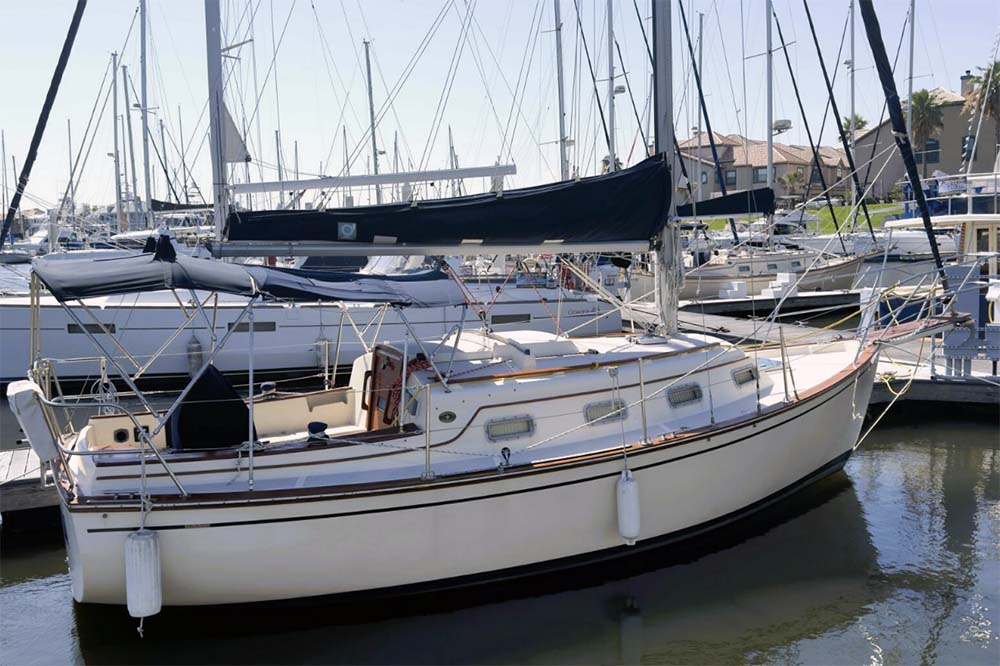
The Island Packet 27 is a small, purpose-built cruiser from Island Packet Yachts that first appeared in the mid-1980s and quickly became the compact flagship of a brand known for safe, comfortable cruising boats. Designed by Robert K. (Bob) Johnson and produced between the mid-1980s and early 1990s, the 27 was conceived explicitly as a blue-water-capable pocket cruiser: heavy displacement, a long-keel attitude and conservative sailplan combine to favor seaworthiness and comfortable motion over club-race performance. That design intent makes the boat attractive to shorthanded couples, live-aboard weekenders stepping up from trailerable boats, and owners who prize a robust, low-stress sailing experience rather than top speed. The model is out of production but remains visible on the used market and commands steady interest from owners who appreciate its build quality and reputation — it tends to trade hands among private buyers rather than charter fleets, and well-maintained examples keep good resale value relative to similarly sized production cruisers.
Design and Construction
The IP-27 is built on a stout fiberglass hull with a traditional long/modified long keel and a cutter-style rig (many examples sailed as cutter-rigged sloops or cutter-sloops), which reinforces its conservative, safe-seakeeping characteristics. With a beam in the neighborhood of 10½ feet and a displacement around 8,000 lb carrying roughly 3,000 lb of ballast, the hull form trades light-air nimbleness for load-carrying capacity, interior volume and predictable handling in confused seas. The long keel and keel-mounted or skeg-protected rudder (depending on the version) reduce vulnerability to prop and rudder damage and simplify directional stability; the cutter rig gives flexibility with headsail combinations for heavy-weather trimming. Construction was typical of Island Packet practice—robust hand-laid fiberglass, teak trim and solid mechanical systems—so repairs to hull, deck or interior are straightforward for professional yards and in many cases approachable for experienced owner-mechanics. These architectural choices (heavy displacement, long keel, conservative rig) help the 27 retain value among buyers who prioritize durability and a low-stress ownership experience.

Performance
Under sail the Island Packet 27 behaves like a classic heavy coastal cruiser: she is not a club racer but she moves confidently and predictably. With an LWL close to 24.25 ft, the theoretical hull speed is about 6.6 knots, and in a steady breeze owners typically report comfortable passage speeds in the 5–6 knot range while steering a course that favors comfort over tight pointing. The long keel gives strong directional stability and helps the boat punch through waves with a steady motion, but it also limits pointing ability and agility in tacks compared with modern fin-keel, spade-rudder 27-footers; the practical result is straight, confidence-inspiring handling in variable sea states rather than quick acceleration or tight close-hauled angles. Because of its weight and keel, the IP-27 is forgiving in gusty conditions and less likely to display abrupt movements—qualities that many coastal cruisers value for family passages and offshore daysails.
Comfort and Accommodations
The wider beam and conservative layout translate into a surprisingly roomy interior for a sub-30 foot boat: the 27 typically offers a forward V-berth, a spacious saloon with settees that convert to berths, and a practical galley and enclosed head—arrangements that make short-term cruising comfortable for a couple or a small family. Storage and tankage (many examples carry ~19–31 gallons fuel and ~31 gallons fresh water depending on configuration) support multi-day outings without constant rationing; the cabin ventilation and light are generous for the era thanks to multiple ports and hatches. Interiors are finished with teak trim and durable joinery that tends to age well when maintained; cosmetic refits are common (new cushions, upholstery, updated galley equipment) and usually give a large uplift to perceived condition and resale appeal. For liveaboard cruising beyond a couple, space becomes tight, but for coastal passagemaking, weekend cruising and comfortable extended days afloat the 27’s layout is practical and pleasant.
Safety and Practicality
Safety features are baked into the design: the long keel and conservative freeboard limit hobbyhorse motion and give predictable recovery from knockdowns, while a protected rudder arrangement reduces the risk of steering failure from groundings. The cutter rig and robust standing rigging layout make heavy-weather sail combinations easier to manage from the cockpit, which is important if you often cruise shorthanded; many owners also point to the roomy cockpit and well-placed winches as practical assets for short-hand sailing. Systems are generally uncomplicated—diesel inboards are common on many examples and the mechanical and electrical systems are straightforward—which keeps routine maintenance manageable and survey repairs more bounded than on more complex boats. For true offshore or full-time liveaboard plans, professional upgrades (modern electronics, reinforced deck hardware, routine rigging replacement) are prudent; for coastal cruising the 27 is well-suited with modest preparation.
Known Issues with the Island Packet 27
Like any production boat of the 1980s, the Island Packet 27 has a short list of recurring survey items that buyers should check closely. The most commonly cited concern in owner forums and owner-association notes is chainplate and rigging area inspection: island-packet models of this vintage often have through-bolted or glassed-in chainplate arrangements that, if not maintained or if built from earlier stainless grades, can require intrusive repairs or replacement. Deck-core moisture and the usual aging-related problems—old standing and running rigging, tired seacocks, dated wiring and electronics, and worn cushions or cabinetry—turn up regularly in pre-purchase surveys. Osmotic blistering is less widely reported on these boats than on some contemporary builders, but like any older fiberglass hull, a careful hull survey is essential. Common recommended improvements buyers often budget for include replacing older 304 stainless chainplates or adding external chainplates, upgrading standing rigging, refreshing the electrical panel and navigation electronics, and addressing any localized deck-core or bedding issues found in a survey—investments that materially reduce long-term ownership risk.
Market Availability and Pricing in the U.S.
The Island Packet 27 is no longer in production; it circulates in the used market and appears most often in traditional boating regions such as New England, the Mid-Atlantic, the Chesapeake, the Great Lakes and on occasion in Florida listings. Asking prices vary with condition, equipment and refit history: current broker and private listings in recent years show examples commonly offered in the $20,000–$35,000 range, with lower-priced boats needing work and well-equipped, repowered examples asking toward the top of that band. That range reflects a premium relative to generic 27-foot production boats because Island Packets are regarded as better-built, with a buyer pool that values offshore capability in a small package. In short, the IP-27 tends to hold value for buyers who want a robust little cruiser and are willing to pay a modest premium for its build quality and reputation.
Below is a comparison with similar sailboats from the same era:
| Model | LOA | Approx. Years Built | Typical US Used Price | Main Differences / Notes |
|---|---|---|---|---|
| Island Packet 27 | ~26.5–27.0 ft | 1984–1992 | $20,000–$35,000 | Modern long-keel cruiser, heavy displacement, cutter rig; built for safe coastal/offshore cruising. |
| Cape Dory 28 | ~28.1 ft | 1974–1988 | $15,000–$35,000 | Traditional full-keel design with conservative lines and proven offshore pedigree; heavier and often simpler systems. |
| Catalina 27 | ~27.0 ft | 1971–1990s (various marks) | $3,500–$12,000 | Mass-market cruiser; widest availability and cheapest entry cost but greater condition variability. |
| Westsail 28 | ~28 ft | 1970s (limited runs) | $15,000–$40,000+ | Very heavy, full-keel bluewater design with strong offshore reputation; can command high prices if well-restored. |
Island Packet 27 vs Cape Dory 28

The Island Packet 27 and the Cape Dory 28 both embrace conservative underbodies and a seakindly motion, but the IP-27’s slightly more modern hull and cutter flexibility tend to make it feel a bit more versatile in mixed conditions. The Cape Dory, designed by Carl Alberg, leans into classic full-keel lines that favor ultimate directional steadiness and traditional aesthetics, which some owners prefer for long offshore legs.
In practical ownership terms, both are built to last, but the IP-27’s layout and systems often feel a touch more contemporary for weekender comfort, while Cape Dorys attract buyers seeking character and heavier displacement. Maintenance profiles are similar—expect rigging refreshes and upholstery updates—but resale tends to favor the IP when the market prizes creature comfort alongside seaworthiness.
► Learn more about de Cape Dory 28
Island Packet 27 vs Catalina 27

Compared with the ubiquitous Catalina 27, the Island Packet 27 is heavier, roomier and designed with a stronger offshore bias; the Catalina is lighter, simpler to trailer (in some marks) and generally tuned toward economical coastal sailing and club racing. That means the Catalina will often be cheaper to buy and easier to launch from a trailer or store ashore, but it usually lacks the build-in robustness and load-carrying capacity that make the IP more comfortable in rough weather.
For a buyer choosing between them, the Catalina is attractive if low purchase cost and abundant parts/support matter most, whereas the Island Packet is better if seaworthiness, interior comfort and a higher base level of construction are priorities—even if that comes with a higher initial price and slightly higher maintenance expectations.
► Learn more about de Catalina 27
Island Packet 27 vs Westsail 28
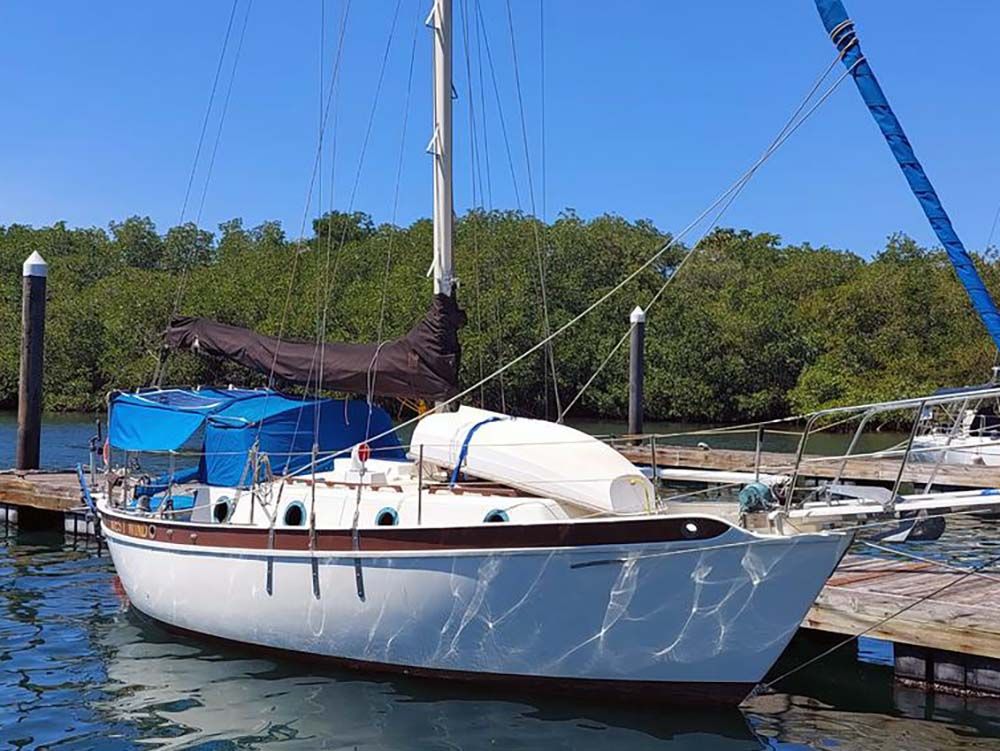
Both boats appeal to sailors who prize old-school seaworthiness, but the Westsail 28 is an extreme example of heavy, traditional bluewater design and often carries a higher emotional premium among bluewater purists. The IP-27 is generally easier to handle and slightly more efficient under sail because of more modern underwater shaping and rigging options, while the Westsail’s weight and full keel make it an uncompromising offshore machine.
From a buyer’s perspective, choose a Westsail if you want a very conservative bluewater platform and accept heavier maintenance and lower light-air performance; choose the Island Packet 27 if you want similar seaworthiness in a package that is friendlier to weekend cruising, dockside life, and a smaller owner’s maintenance budget.
► Learn more about de Westsail 28
Maintenance Costs of an Island Packet 27 in the U.S.
Typical annual and periodic ownership costs for a well-kept 27-foot cruiser are moderate but driven by age and local costs. The items below show typical ranges and notable one-time expenses; each bold label is followed by a short explanatory note.
- Slip / Mooring / Yard Storage: $1,200–$7,000 per year — dependent on region (Great Lakes and inland lakes at the low end; New England, Seattle and Florida premium marinas at the high end).
- Insurance: $300–$900 per year — varies with cruising area, valued inventory and owner experience.
- Engine servicing / fuel (inboard diesel typical): $300–$1,200 per year — routine service and occasional fuel; outboard examples cost less.
- Antifouling / bottom paint & haul: $300–$1,200 every 1–2 years — DIY bottom paint lowers cost; yard work raises it.
- Standing & running rigging: $100–$1,000 per year for inspection and small parts; full standing rigging replacement $1,000–$4,000 depending on wire, fittings and labor.
- Sails: $0–$4,000 — annual repairs are inexpensive, but a full main and headsail replacement can be $1,500–$4,000 depending on cloth and cut.
- Electronics & batteries: $200–$2,000 — incremental upgrades over time; chartplotter and instruments are one-time bigger spends.
- Survey / one-time refits (deck core repair, chainplate replacement, osmosis fix, repower): $500–$15,000+ — chainplate or keel/structural work and repowers drive the biggest, unpredictable cost items.
Region matters: owners in cold climates budget more for winterization, shrinkwrapping and storage; Florida/Caribbean owners budget more for year-round slip fees and higher insurance exposure. The IP-27 is generally owner-serviceable for routine items (bedding, varnish, basic electrical, minor sail repairs), but structural, rigging and repower work usually require professionals. Overall, costs are medium for a 27-foot cruiser: higher than a daysailer but substantially lower than larger yachts, and a well-maintained IP-27 tends to retain resale value that offsets reasonable upkeep investments.
Conclusion
The Island Packet 27 is a coherent package for buyers who want a small yacht built around safety, comfort and conservative seakeeping rather than speed. Its strengths are clear: a stout hull, a roomy interior for the length, forgiving motion in a seaway and an owner community that values maintenance and long life. Weaknesses are typical of an older, heavier design—relatively modest light-air performance, the need to watch chainplates/deck cores and the occasional costly structural or rigging repair if deferred. For shorthanded couples, coastal cruisers who prize reliability, or buyers looking for a compact boat with bluewater DNA at a modest price, the Island Packet 27 is well worth seeking out: with a careful survey and attentiveness to known weak points, it represents a sensible, long-lived investment for coastal cruising and occasional offshore work, and it generally holds resale appeal among buyers who understand and value its conservative design priorities.
Specifications
| Hull Type | Long Keel |
| Rigging Type | Cutter |
| LOA | 26.50 ft / 8.08 m |
| LWL | 24.25 ft / 7.39 m |
| S.A. (reported) | 405.00 ft² / 37.63 m² |
| Beam | 10.50 ft / 3.20 m |
| Displacement | 8,000.00 lb / 3,629 kg |
| Ballast | 3,000.00 lb / 1,361 kg |
| Max Draft | 3.70 ft / 1.13 m |
| Construction | FG |
| First Built | 1984 |
| Last Built | 1992 |
| # Built | 243 |
| Builder | Island Packet Yachts (USA) |
| Designer | Bob Johnson |
| Auxiliary Power | Yanmar Diesel, 18 HP |
| Fuel Capacity | 19 gals / 72 L |
| Water Capacity | 31 gals / 117 L |
| S.A. / Displ. | 16.25 |
| Bal. / Displ. | 37.50 |
| Disp. / Len. | 250.44 |
| Comfort Ratio | 21.65 |
| Capsize Screening Formula | 2.10 |
| S# | 2.10 |
| Hull Speed | 6.60 kn |
| Pounds/Inch Immersion | 909.80 pounds/inch |
| I | 35.00 ft / 10.67 m |
| J | 12.00 ft / 3.66 m |
| P | 30.00 ft / 9.14 m |
| E | 13.00 ft / 3.96 m |
| S.A. Fore | 210.00 ft² / 19.51 m² |
| S.A. Main | 195.00 ft² / 18.12 m² |
| S.A. Total | 405.00 ft² / 37.63 m² |
| S.A./Displ. (calc.) | 16.25 |
| Est. Forestay Length | 37.00 ft / 11.28 m |
Disclaimer
The considerations and analyses presented regarding the Island Packet 27 sailboat are of a general nature and are based on the available information and technical data on this model, interpreted to the best of our knowledge and understanding. It is important to note that the specific characteristics of any particular sailboat may vary due to custom modifications, maintenance performed, and conditions of use over time, among other factors. Therefore, the details and performance of the boat you are considering may not exactly match the information provided here.
We strongly recommend that, before making any purchasing or usage decisions, you conduct a detailed inspection of the boat in question, consult with nautical professionals and other sailors, and consider your personal needs, expectations, and capabilities. Each sailboat may have unique particularities that affect its performance and suitability for different types of sailing and sailors.
The information contained in this analysis should be used as a general guide and not as a definitive reference. Professional evaluation and personal inspection are essential to ensure that the boat meets your specific requirements and expectations.