


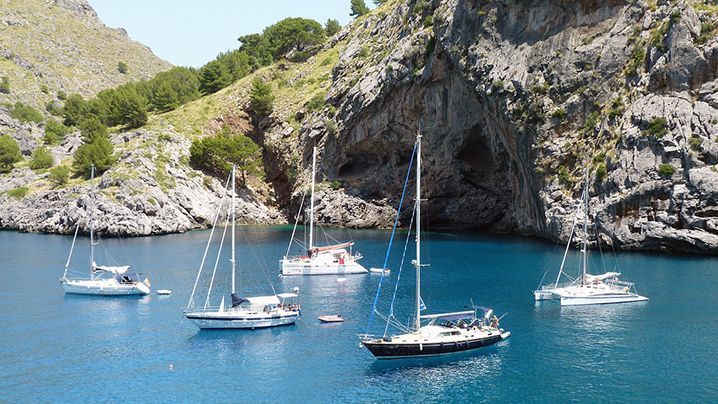
When the plan is to spend several weeks onboard a coastal cruise, the boat is no longer just a recreational vessel but a home with very different space, safety, and autonomy requirements. This is where monohulls of 36–39 ft (≈11–12 m) or catamarans of 36–43 ft (≈11–13 m) come into play for those who prioritize space and stability. At this level, the focus is no longer just sailing, but living well at sea without constantly relying on a nearby port.
Length, Draft, and Engine
- Length: From 36 ft (≈11 m) onwards, interior layout allows three cabins, two bathrooms, and a spacious salon without feeling cramped.
- Draft: Monohulls typically 5.9–6.6 ft (≈1.8–2.0 m), providing good sailing performance but limiting very shallow anchorages. Catamarans, with shallow draft of 3.9–4.9 ft (≈1.2–1.5 m), can access coves inaccessible to monohulls.
- Engine: Monohulls 36 ft usually have 30–40 HP inboard; catamarans have two engines of 20–30 HP each. Dual-engine redundancy is a strong safety feature for long-term cruising.
Rig and Handling Systems
For multi-week sailing, the rig must be designed for efficiency and durability:
- Genoa furler and spare jib (storm sail or staysail) to adjust configuration according to the wind.
- Mainsail with lazy-bag and multiple reef points; some owners prefer in-mast furling for convenience, accepting some performance loss.
- Electric winches: not a luxury, but a real relief for repeated sail hoisting or anchoring maneuvers.
- Powerful, reliable autopilot capable of steering for long hours in rough seas.
- Optional: additional sails such as gennaker or code zero, useful for long passages in light winds.
Autonomy and Interior Comfort
Multi-week cruising requires living onboard with minimal compromise:
- Water: 79–132 gal (300–500 L) tanks, optionally complemented by a portable desalinator (10–15 L/h) for real freedom.
- Galley: at least three burners + oven, large fridge (≈21–32 gal / 80–120 L), optional freezer. A comfortable galley sustains life onboard.
- Bathrooms: Two full bathrooms are ideal. One bathroom on a boat for more than four people causes queues and friction.
- Cabins: Each couple or crew member should have their own space. On catamarans, cabins in separate hulls provide notable privacy.
- Storage: ample lockers and chests for clothing, provisions, and leisure equipment; otherwise, the boat becomes an improvised camp.
Cockpit: Main Salon
For long stays, the cockpit becomes the boat’s vital center, often more important than the interior salon:
- Space: comfortable for 6–8 people. In catamarans, the central cockpit at salon level offers pleasant spatial continuity.
- Table: large and sturdy, suitable for eating, working, reading, or route planning.
- Protection: large bimini (often rigid in catamarans) and solid sprayhood against wind and sun.
- Large lockers: store fenders, lines, fins, snorkel gear, jerrycans, or even a portable generator.
- Easy water access: wide ladder and swim platform or sugar-scoop for frequent water entry.
Energy and Onboard Systems
Autonomy is crucial:
- Service batteries: 300–500 Ah.
- Power generation: solar panels (200–400 W), wind generator, and optionally a diesel generator.
- Inverter: for 220 V to charge devices, computers, or basic appliances.
- LED lighting and fans: comfort with low consumption.
- Complete electronics: AIS, highly recommended radar, plotter, autopilot, VHF (fixed + handheld), optional SSB or satellite phone for long passages.
Safety and Anchoring
Extended cruising requires redundancy:
- Main anchor: 44–55 lb (≈20–25 kg) with 164–262 ft (≈50–80 m) of chain.
- Two reserve anchors for different seabeds or emergencies.
- Certified liferaft for the full crew.
- Life jackets with harnesses and jacklines.
- Expanded first aid kit with medications for more than a week without pharmacy access.
- Spare parts kit: engine belts, filters, bilge pumps, lines.
Quick Guide for Multi-Week Sailing (Monohull 36–39 ft / Catamaran 36–43 ft)
- Length and Draft: Monohulls 11–12 m, three cabins and two bathrooms, draft 5.9–6.6 ft (≈1.8–2.0 m) for good sailing, limited shallow anchorages. Catamarans 11–13 m, shallow draft 3.9–4.9 ft (≈1.2–1.5 m) for closer anchoring and access to waters monohulls cannot reach.
- Engine: Monohulls 30–40 HP inboard; catamarans with twin 20–30 HP engines for redundancy.
- Rig and Handling: Genoa furler + spare jib (storm/staysail), mainsail with lazy-bag and multiple reefs; optional in-mast furling. Electric winches recommended. Strong autopilot, optional gennaker or code zero for light winds.
- Autonomy and Comfort: 79–132 gal (300–500 L) water; desalinator 10–15 L/h optional. Galley 3 burners + oven, fridge 21–32 gal (80–120 L), optional freezer. Two full bathrooms. Generous storage. Separate cabins for privacy.
- Cockpit: main living area for 6–8 people, large table, bimini and sprayhood, deep lockers, easy access to water.
- Energy and Systems: 300–500 Ah batteries, 200–400 W solar, wind generator, optional diesel generator. Inverter 220 V, LED lights, ventilation, full electronics including AIS, radar, VHF, autopilot, plotter, SSB/satellite optional.
- Safety and Anchoring: main anchor 44–55 lb (≈20–25 kg) with 164–262 ft (≈50–80 m) chain, two reserve anchors, liferaft, life jackets with harness, jacklines, expanded first aid, and spare parts.
In summary: for multi-week coastal cruising, the sailboat must offer space, redundancy, and autonomy. An 11–12 m monohull—or a catamaran if comfort and stability are priorities—allows life onboard to be (almost) as comfortable as on land, with the added benefit of changing scenery whenever desired.
Models to Consider:
| Model | Length | Draft | Engine | Crew |
|---|---|---|---|---|
| Catalina 36 (1982–2006, very popular U.S. cruiser) | ≈ 11.0 m | ≈ 1.35 m (shoal) – 1.78 m (deep) | ≈ 25–30 HP (diesel inboard) | 4–6 |
| Hunter 36 (2001–2009, common on U.S. East Coast) | ≈ 11.0 m | ≈ 1.52 m (shoal) – 1.98 m (deep) | ≈ 27–29 HP (diesel inboard) | 4–6 |
| Beneteau Oceanis 37 (2008–2014, popular in U.S. charter fleets) | ≈ 11.5 m | ≈ 1.62 m (shoal) – 1.90 m (deep) | ≈ 29 HP (diesel inboard) | 4–6 |
| Jeanneau Sun Odyssey 379 (2011–2015, still widely available used) | ≈ 11.3 m | ≈ 1.50 m (shoal) – 2.00 m (deep) | ≈ 29 HP (Yanmar diesel) | 4–6 |
| Hanse 388 (modern, in production, available in U.S.) | ≈ 11.4 m | ≈ 1.62 m (shoal) – 2.06 m (deep) | ≈ 27 HP (diesel inboard) | 4–6 |
| Dufour 382 Grand Large (2014–2019, popular coastal cruiser) | ≈ 11.2 m | ≈ 1.60 m (shoal) – 1.90 m (deep) | ≈ 30 HP (diesel inboard) | 4–6 |
| Island Packet 370 (2003–2011, U.S. full-keel bluewater option) | ≈ 11.3 m | ≈ 1.40 m (full keel) | ≈ 40 HP (Yanmar diesel) | 4–5 |
| Lagoon 380 (2000–2019, most popular cruising catamaran) | ≈ 11.55 m | ≈ 1.15 m | 2 × 27 HP (diesel inboards) | 6–8 |
| Léopard 40 (2004–present, very popular in U.S. charter market) | ≈ 12.2 m | ≈ 1.25 m | 2 × 29 HP (diesel inboards) | 6–8 |
| Bali 4.1 (2018–present, modern cruising catamaran) | ≈ 12.35 m | ≈ 1.20 m | 2 × 30 HP (diesel inboards) | 6–8 |
Conclusion
Choosing a sailboat or catamaran for multi-week cruises means prioritizing space, autonomy, and comfort. Monohulls of 36–39 ft (≈11–12 m) and catamarans of 36–43 ft (≈11–13 m) provide the necessary space to live onboard comfortably, store provisions and equipment, and maintain crew privacy during extended stays. A well-equipped boat, with appropriate energy, anchoring, and rigging systems, ensures sailing is comfortable and safe, preventing the experience from becoming a test of endurance.
Learn more about coastal cruising sailboats: