


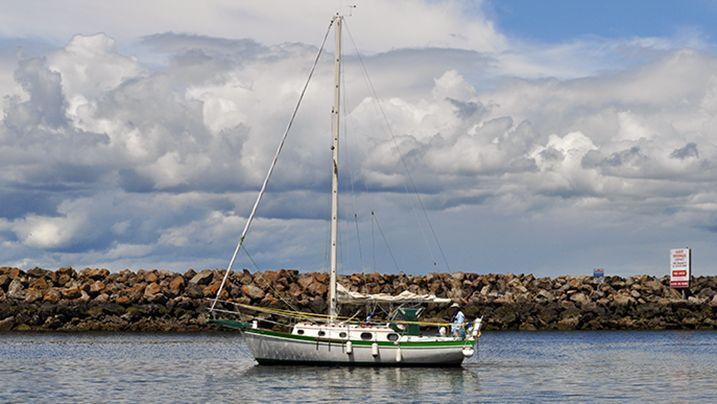
In the world of coastal cruising, it’s easy to be tempted by larger boats, offering space and equipment to feel like a small floating apartment. And if your budget allows, nothing stands in the way. Setting aside personal needs and preferences (everyone knows their own), when the goal is a two- or three-day getaway, the key is balance: a sailboat spacious enough to provide comfort and autonomy, yet manageable enough that sailing doesn’t become a burden.
The following recommendations are based on a realistic scenario, where the budget requires seeking boats that offer the best balance between performance and maintenance costs. In other words: models that maximize value for every euro spent, without complicating maneuvers or inflating expenses.
Length, Draft, and Maneuverability
30–33 ft (≈9–10 m) of length is the reference. This provides interior space and stability without yet entering the complexity of a large sailboat. The recommended draft rises to 4.9–5.6 ft (≈1.5–1.7 m), enough to ensure good sailing performance and upwind ability, while still compatible with anchorages relatively close to the coast.
A 15–25 HP engine is sufficient: plenty of power for docking in tight marinas, sailing against currents, and providing a safety margin if the weather changes. More power would add weight and maintenance costs without clear advantages in this length range.
Rig and Handling Systems
At this level, it remains essential to make sailing manageable for a small crew:
- Genoa furler: almost indispensable to avoid changing sails constantly.
- Mainsail with lazy bag and lazy jacks: facilitates lowering and organizing the sail, especially important when the day ends with accumulated fatigue.
- Slab reefing: essential for reducing mainsail area in seconds when the wind shifts.
- Properly sized winches and well-positioned sheet leads: allow a couple to handle the boat without excessive effort.
The goal is not radical simplicity like on an 8 m (≈26 ft) boat recommended for day or weekend trips, but efficiency: maneuvers should be quick and require minimal physical effort.
Autonomy and Interior Comfort
At this stage, we’re talking about spending several nights onboard, so minimum requirements change compared to shorter trips:
- Water tanks: 80–150 L (≈21–40 gal), enough for cooking and washing without rationing every glass.
- Two-burner stove: allows preparing more than just coffee or pre-cooked meals. A small compressor fridge (40–60 L / ≈10–16 gal) provides real autonomy for fresh food.
- Functional bathroom: a fixed marine toilet with a black water tank and a simple sink makes a huge difference compared to a portable toilet.
- Cabins: ideally, two separate cabins (aft and forward) allow privacy if more than two people are onboard. The central salon can serve as an additional sleeping area.
The Cockpit: More Space, More Comfort
In this scenario, the cockpit should be more than just a steering station: it’s where you have breakfast, chat at sunset, and spend much of your time at anchor.
- Size: must allow four people to sit at the table without feeling cramped.
- Central table (fixed or folding): a sturdier table with cup holders or cutlery storage makes sense here.
- Deep lockers: on a 30–33 ft (≈9–10 m) boat, you expect enough storage for fenders, lines, water jugs, or even a folding dinghy.
- Protection: a bimini or sprayhood is not a luxury, but a comfort and safety feature against sun and splashes.
- Safety: sturdy lifelines, accessible handrails, and a solid swim ladder are essential, as swimming from anchorages will be frequent.
Safety and Energy
Two- or three-day trips require extra attention to safety and systems:
- Electronics: a small plotter with updated charts and a depth sounder prevents surprises at anchor. An autopilot becomes genuinely useful.
- Power: consumption increases with fridge, lighting, and electronics. Two service batteries and the option to charge in port are sufficient, though a 100 W solar panel provides extra security.
- Anchor: for this size, a 22–33 lb (≈10–15 kg) anchor with 66–98 ft (≈20–30 m) of chain and additional line allows confident anchoring even if the wind changes overnight.
Quick Guide for 2–3 Day Trips on a ~30–33 ft (≈9–10 m) Sailboat
- Length and Draft: 30–33 ft (≈9–10 m) in length, with a draft of 4.9–5.6 ft (≈1.5–1.7 m). Good balance between habitability, stability, and sailing performance, while still flexible for anchorages near the coast.
- Engine: 15–25 HP inboard. Sufficient power for maneuvering in tight marinas, sailing against currents, and providing a safety margin without adding unnecessary weight or costs.
- Rig and Handling: Genoa furler almost essential; mainsail with lazy bag and lazy jacks for easier lowering; slab reefing for quick sail area reduction; properly sized winches and well-placed sheet leads. Designed so a couple can handle the boat without excessive effort.
- Autonomy and Comfort: Water tanks 21–40 gal (≈80–150 L); two-burner stove; small compressor fridge 10–16 gal (≈40–60 L); fixed marine toilet with black water tank; two enclosed cabins (fore and aft) + convertible salon for guests.
- Cockpit: spacious, room for 4 around the table; fixed or folding central table; deep lockers for fenders, lines, or dinghy; highly recommended bimini or sprayhood; sturdy lifelines, accessible handrails, and solid swim ladder.
- Safety and Energy: plotter with charts and depth sounder; basic autopilot; 2 service batteries with optional 100 W solar panel; 22–33 lb (≈10–15 kg) anchor with 66–98 ft (≈20–30 m) of chain plus extra line.
- Ideal Crew: 2 people, up to 4 comfortably, with the option for 5–6 if using the convertible salon.ar con un margen de seguridad sin añadir peso o costes innecesarios.
Models to Consider:
| Model | Length | Draft | Engine | Crew |
|---|---|---|---|---|
| Catalina 30 (1974–2008, one of the most popular U.S. sailboats) | ≈ 9.14 m | ≈ 1.35 m (shoal) – 1.62 m (deep) | ≈ 21 HP (inboard diesel) | 4–6 |
| Hunter 30 (1973–1983, widely available in the U.S.) | ≈ 9.14 m | ≈ 1.32–1.52 m depending on keel | ≈ 18–22 HP (inboard diesel) | 4–5 |
| O’Day 302 (1987–1989, U.S. coastal cruiser) | ≈ 9.20 m | ≈ 1.37 m (shoal) – 1.57 m (deep) | ≈ 18–22 HP (inboard diesel) | 4–5 |
| Pearson 31-2 (1987–1991, classic East Coast cruiser) | ≈ 9.45 m | ≈ 1.57 m (shoal) – 1.68 m (deep) | ≈ 16–18 HP (inboard diesel) | 4–5 |
| Island Packet 31 (1983–1989, full-keel cruiser) | ≈ 9.45 m | ≈ 1.37 m (full keel) | ≈ 27 HP (Yanmar diesel) | 4–5 |
| Beneteau First 310 (1985–1992, popular in U.S. market) | ≈ 9.45 m | ≈ 1.52–1.65 m (depending on keel) | ≈ 18–22 HP (diesel inboard) | 4–6 |
| Jeanneau Sun Odyssey 319 (modern, still in production) | ≈ 9.80 m | ≈ 1.50 m (shoal) – 1.85 m (deep) | ≈ 21 HP (diesel inboard) | 4–6 |
| Catalina 315 (2012–present, modern U.S. production) | ≈ 9.45 m | ≈ 1.60 m (shoal) – 1.93 m (deep) | ≈ 21 HP (standard diesel) | 4–6 |
| Hanse 315 (modern, available in U.S.) | ≈ 9.62 m | ≈ 1.35 m (shoal) – 1.85 m (deep) | ≈ 14–21 HP (diesel inboard) | 4 |
| Dufour 310 Grand Large (modern, still produced) | ≈ 9.67 m | ≈ 1.60 m (shoal) – 1.90 m (deep) | ≈ 19 HP (diesel inboard) | 4–6 |
Conclusion
Ultimately, choosing a sailboat for 2–3 day trips is about finding the right balance between comfort and simplicity. A 30–33 ft (≈9–10 m) boat opens the door to separate cabins, a fixed bathroom, and tanks that provide real autonomy, without the logistics required by a larger vessel. In this range, some of the most versatile pre-owned models appear, designed for those who want to experience the sea as a weekend getaway or a long holiday break.
The key is to remember that sailing should add enjoyment and reduce complications: a boat that lets you head out on short notice, enjoy time with your crew, and return feeling like you’ve had a true mini-vacation rather than a logistical challenge.
Learn more about coastal cruising sailboats: